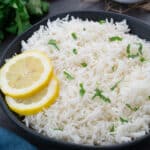
Basmati Rice
Perfect your Basmati rice with this easy, step-by-step recipe. It’s ideal for biryani, pulao, and other flavored rice dishes, delivering fluffy, light grains in under 30 minutes. Enjoy it with your favorite curries and sides for a satisfying meal at home.
Instructions
Cooking Basmati Rice
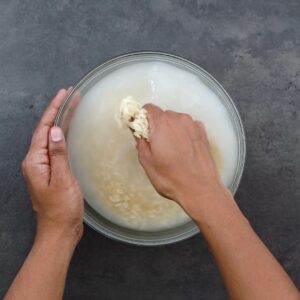
- Begin by rinsing the Basmati rice under cold tap water until the water runs clear. This removes the excess starch and helps you achieve a fluffier texture with more separated grains; otherwise, the rice may become sticky. Keep rinsing until the water is no longer cloudy. Once done, drain the rice and set it aside.
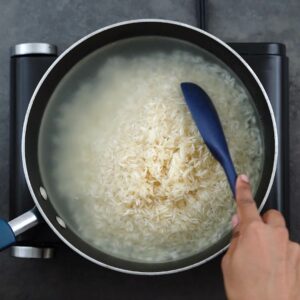
- In a wide-bottomed pot, bring the water to a boil over medium heat. Using a wide pot helps the rice cook evenly, preventing clumping or undercooked grains.

- Gently add the rinsed and drained rice to the boiling water. Give it a gentle stir once to prevent the rice from sticking to the bottom of the pot. Avoid stirring too often, as this can break the delicate grains.
- Let the rice cook without disturbing it. You’ll notice bubbles forming around the edges and in the center of the pot, indicating that the rice is cooking properly.
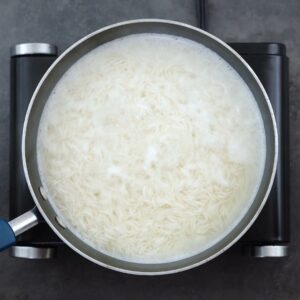
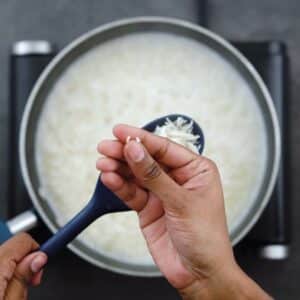
- At this point, the rice should be about 70% done. The grains will have elongated, but when pressed between your fingers, they should still have a slight firmness in the middle. This helps prevent the rice from overcooking during the final simmer.
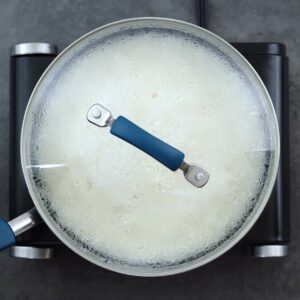
- Reduce the heat to low, cover the pot tightly with a lid to trap the steam, and let the rice simmer gently for 10 to 15 minutes. This step allows the rice to finish cooking while absorbing all the water. Avoid lifting the lid frequently to keep the steam inside.
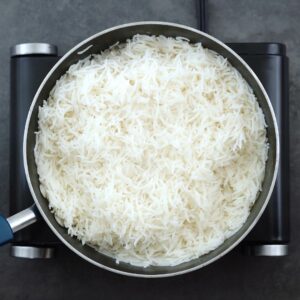
- Once all the water is absorbed, turn off the heat and let the rice sit, covered, for about 5 minutes. This resting period helps the grains firm up and stay separate. After resting, gently fluff the rice with a fork or spatula. Now, your perfectly fluffy, tender, and soft Basmati rice is ready to serve.
Serving
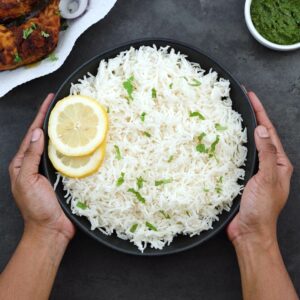
- Enjoy this cooked Basmati rice with a variety of dishes, including chicken, vegetable, and egg curries. Be sure to check out the serving suggestions section for more delicious pairing ideas!
Notes
Here are some helpful tips to make your Basmati rice nice and fluffy every time:
- Choosing Basmati Rice: Always go for aged Basmati rice, as noted on the packaging. Aged rice has less moisture, which helps it stay nice and fluffy when cooked. Fresh rice can turn sticky, so choosing aged rice makes a big difference.
- Grain Length: Both long and extra-long grain Basmati work well. For dishes like biryanis and pulaos, you can use extra-long grains for that more luxurious look.
- Rinsing: Make sure to rinse the rice thoroughly until the water runs clear. This removes the excess starch and helps you achieve a fluffier texture with more separated grains.
- Rice to Water Ratio: I suggest you stick to the ideal rice-to-water ratio of 1:1½. This works perfectly for the absorption method and gives you light, fluffy rice every time.
- Cooking Temperature: Start by cooking the rice on medium heat until it’s about 70% done—look for bubbling water. Then, reduce the heat to low and cover with a lid. This helps the rice cook evenly and prevents burning.
- Choice of Pot: Use a wide-bottomed pan if possible. A cramped pot can cause uneven cooking, with mushy rice at the bottom and undercooked grains on top.
- Salt Addition: Traditionally, we don't add salt to our rice, which helps control the overall salt intake when paired with other dishes. However, in some regions, adding salt is a must for many people. So, feel free to choose what you prefer!
- Cooking Basmati Rice for Biryani: This method is great for rice served with curries, but for biryani, you can boil the rice with aromatics until it’s 70% cooked, then layer it with veggies or meat. Check out my Mughlai Chicken Biryani recipe for detailed instructions.
- Using Stock Instead of Water: If you want to add more flavor, you can cook the rice in vegetable or chicken stock instead of water. This infuses the rice with a subtle richness, perfect for pairing with mild dishes.
- Aromatic Additions: If you want a more fragrant rice, you can add in a couple of cardamom pods, a cinnamon stick, or a bay leaf while cooking. These subtle aromatics complement the natural fragrance of Basmati rice.
- Health Benefits: Basmati rice is a healthier choice compared to other white rice varieties. It has a lower glycemic index, which can help reduce the risk of type 2 diabetes, and it's also rich in dietary fiber, supporting better digestion. (Source: WebMD)
Nutrition
Serving: 1serving | Calories: 338kcal | Carbohydrates: 74g | Protein: 7g | Fat: 1g | Saturated Fat: 0.2g | Polyunsaturated Fat: 0.2g | Monounsaturated Fat: 0.2g | Sodium: 13mg | Potassium: 106mg | Fiber: 1g | Sugar: 0.1g | Calcium: 31mg | Iron: 1mg
Visit the Recipe
Want to view the full post? Simply scan the QR code with your camera and tap the link.
