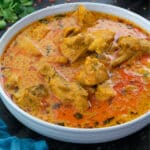
Chicken Korma
This rich and creamy Chicken Korma is a Mughlai classic, featuring tender chicken, aromatic spices, and a yogurt-based curry sauce. Perfectly balanced in flavor, it pairs beautifully with naan, roti, or rice for a comforting lunch or dinner.
Ingredients
To Marinate Chicken
- 2 lb Chicken mixed bone in pieces
- 1 tbsp Ginger Garlic Paste
- 2 tsp Kashmiri Chili Powder
- 3 tsp Coriander Powder
- ¾ tsp Garam Masala Powder
- ½ tsp Turmeric Powder
- 3 tbsp Greek Yogurt or thick curd
- 2 tsp Salt
To Make Korma Curry Paste
- 2 tbsp Oil
- 2 Bay Leaves
- 1 Cinnamon Stick small
- 3 Cloves
- 4 Cardamom
- 1 tsp Cumin Seeds
- 2 Green Chili slited
- 2 Onion medium size , sliced
- 15 Cashews
Other Ingredients
- 2 tbsp Oil
- 1 cup Water or adjust for preferred consistency
- Coriander Leaves cilantro, to garnish
Instructions
Marinating the Chicken
- Begin your Chicken Korma by marinating the chicken. In a bowl, mix ginger garlic paste, Kashmiri chili powder, coriander powder, turmeric, garam masala, salt, and thick Greek yogurt or curd with the chicken until it’s well-coated.
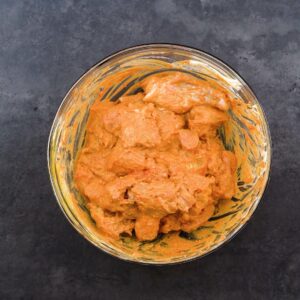
- For best results, cover the bowl and let the chicken marinate for at least 30 minutes at room temperature, or refrigerate it for 1-2 hours if you have extra time. Marinating not only tenderizes the chicken but also removes any raw smell, giving it a rich, tender texture. While the chicken is marinating, you can start preparing the korma curry paste.
Preparing Korma Curry Paste
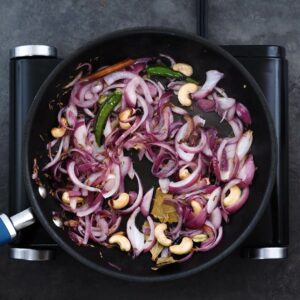
- Heat oil in a pan over medium heat. Add bay leaves, a small cinnamon stick, cardamom pods, cloves, cumin seeds, green chilies, onions, and cashews. Sauté until the onions turn soft and a deep golden brown—this caramelization step brings out a sweet, rich flavor in the paste.
- Once the mixture has cooled to room temperature, transfer it to a blender and blend until you get a smooth, fine paste. If needed, add a little water to help with blending. Your Korma paste is now ready and packed with aromatic flavors that will be the base of the dish.
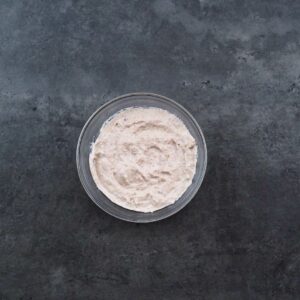
Making Chicken Korma
- In a separate pan, heat oil over medium heat and add the marinated chicken. Sauté for a few minutes until the chicken begins to release its water and starts to cook through.
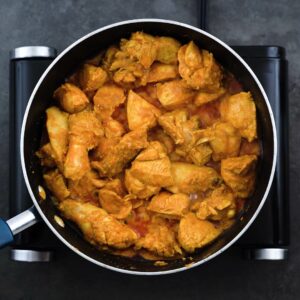
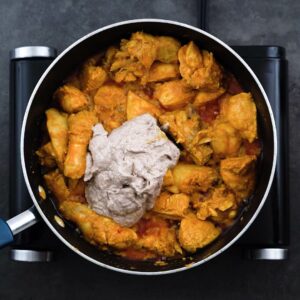
- Add the prepared korma paste to the chicken, stirring gently to coat each piece evenly. Pour in enough water to create a thick but pourable sauce, adjusting as needed for your desired consistency.
- Cover the pan and let the mixture simmer on low-medium heat for 15-20 minutes, allowing the chicken to cook slowly and absorb the flavors of the korma paste.
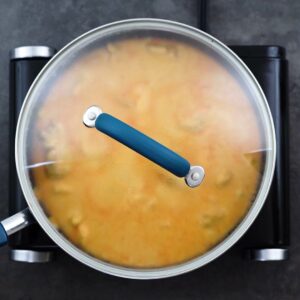
- Remove the lid, stir gently, and continue to simmer for another 10 minutes, or until the chicken is thoroughly cooked. Adjust the salt to taste at this stage.
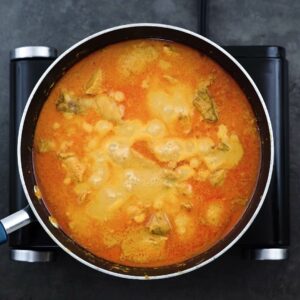
- You’ll know the korma is ready when you see the oil starting to separate along the edges of the pan—this means the flavors have fully developed. Garnish with fresh coriander leaves or cilantro and remove from heat. Your flavorful Chicken Korma is now ready to serve!
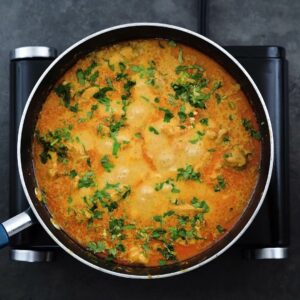
Serving
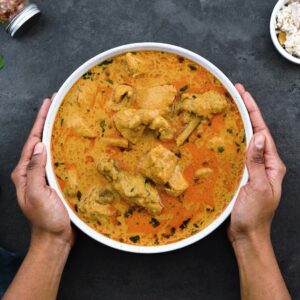
- Serve with your choice of rice, naan, or roti. For more pairing ideas, check out the Serving Suggestions below to create a complete meal experience.
Notes
Here are some helpful tips to make the perfect Chicken Korma in your kitchen every time:
- Fresh Ingredients: Whenever possible, use fresh ginger and garlic paste instead of pre-made options for a more vibrant flavor. You can check out my recipe to make homemade paste.
- Bone-in Pieces: For an authentic taste, choose bone-in chicken, which adds depth and richness to the curry. Boneless chicken thighs or breast work well as an alternative and cook faster, making them convenient if you're short on time.
- Toasting Whole Spices: For even deeper flavors, lightly toast the whole spices (bay leaves, cinnamon stick, cardamom, cloves, cumin seeds) in a dry pan before adding them to the oil. This brings out their natural oils and intensifies their aroma, adding another layer of flavor to the dish.
- Korma Curry Paste: The curry paste is key to achieving the traditional Korma flavor. While it’s best to follow the recipe closely, you can substitute cashews with almonds and use store-bought fried onions if needed. When using pre-made onions, first sauté the spices and nuts to release their aroma, then blend them with the onions.
- Simmering the Korma: Cooking Chicken Korma on low-medium heat is essential for deep, rich flavors. Take your time with this step, as slow simmering allows the chicken to fully absorb the spices, onions, and nuts. Stir occasionally to prevent sticking, but avoid too much stirring, which can break down the sauce’s texture.
- Spice Level Adjustment: Adjust the heat to suit your taste by modifying the amount of green chili or chili powder. For a milder Korma, simply reduce the chili powder or substitute it with a milder option like paprika or low-heat chili powder.
- Consistency Control: If your Korma ends up thicker than desired, gradually add water or chicken stock, stirring well after each addition to achieve a smooth consistency. Avoid adding too much liquid at once; it’s easier to thin the sauce than to thicken it again.
- Resting Time Post-Cooking: Once cooked, let the Chicken Korma sit, covered, for a few minutes. This resting time allows the flavors to meld together, enriching the taste. You may notice the sauce thickening slightly as it sits, which gives it a luxurious texture.
Nutrition
Serving: 1serving | Calories: 354kcal | Carbohydrates: 10g | Protein: 19g | Fat: 27g | Saturated Fat: 5g | Polyunsaturated Fat: 6g | Monounsaturated Fat: 14g | Trans Fat: 0.1g | Cholesterol: 66mg | Sodium: 1062mg | Potassium: 321mg | Fiber: 3g | Sugar: 3g | Vitamin A: 133IU | Vitamin C: 8mg | Calcium: 60mg | Iron: 2mg
Visit the Recipe
Want to view the full post? Simply scan the QR code with your camera and tap the link.
