
Chilli Paneer
Enjoy Chilli Paneer, a vibrant Indo-Chinese dish that’s a vegetarian twist on classic Chilli Chicken. Made with paneer, crunchy bell peppers, and flavorful Chinese sauces, this dish offers a perfect balance of sweet, sour, and spicy tastes. Whether served as an appetizer or paired with fried rice or noodles, it’s ready in just 30 minutes, making it a quick and delicious meal option.
Ingredients
For Marinating Paneer
- 1.75 lb Paneer cut into small squares
- 1 tbsp Ginger Garlic Paste
- 1 tsp Paprika or Kashmiri Chilli Powder
- ½ tsp Ground Black Pepper
- 2 tbsp Soy Sauce low sodium
- 2 tbsp Cornstarch
- 2 tbsp All Purpose Flour
For Pan Frying Paneer
- 3 tbsp Oil or adjust as needed
For Cornstarch Slurry
- 1 tbsp Cornstarch
- 3 tbsp Water
For Stir Frying
- ¼ cup Oil
- 1 tsp Garlic chopped
- 1 tsp Ginger chopped
- 3 Green Chili slited
- 2 tbsp Green Onion white part
- ¼ cup Onion chopped and layers separated
- ¼ cup Yellow Bell Pepper chopped
- ¼ cup Green Bell Pepper chopped
- 2 tbsp Soy Sauce low sodium
- 1 tsp Rice Vinegar
- 1 tbsp Ketchup
- 1 tbsp Chilli Sauce or chili paste or sambal oelek
- ½ tsp Ground Black Pepper
- Salt to taste
- 1 tsp Brown Sugar
For Garnishing
- Green Onions to garnish
Instructions
Marinating the Paneer
- Take a wide bowl and add the paneer along with all the ingredients listed for marination.
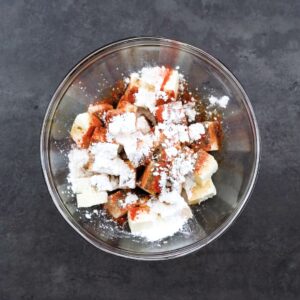
- Mix thoroughly to coat the paneer evenly with the seasonings. Note: Salt is not added since the soy sauce already provides enough saltiness. There’s also no need to rest the marinated paneer before shallow frying.

Pan Frying the Paneer
- Heat oil in a frying pan over medium heat. Once the oil is hot, carefully place the marinated paneer pieces in the pan one by one, making sure not to overcrowd. This allows the pieces to fry evenly without sticking together.
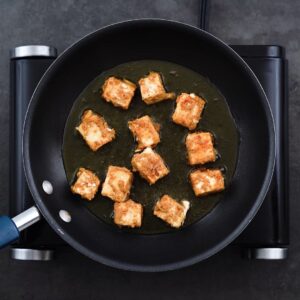
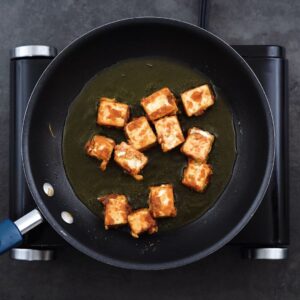
- Fry the paneer for a few minutes on each side, turning gently until all sides are golden brown and the marinade’s flavors are locked in. Use tongs or a spatula to flip the pieces carefully to prevent them from breaking.
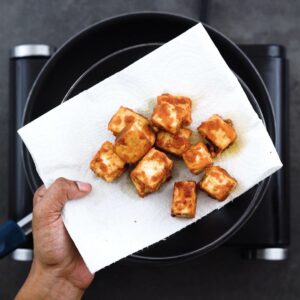
- Once fried to perfection, remove the paneer from the pan and place it on a plate lined with paper towels to absorb any excess oil. Set it aside while you prepare the rest of the dish.
Making Chilli Paneer
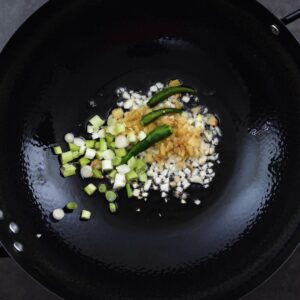
- Heat oil in a wok over high heat. Once the oil is hot, add the ginger, garlic, green chili, and green onions. Sauté for about a minute, stirring continuously until the mixture turns fragrant. This step builds the foundation of the dish’s bold, aromatic flavors.
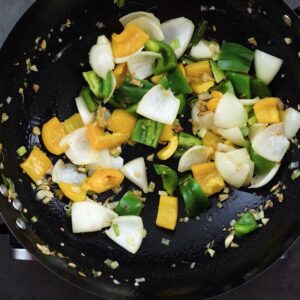
- Add the diced onions and bell peppers to the wok. Stir-fry them for 2 to 3 minutes over high heat. The goal is to cook them just enough to make them crisp-tender, retaining a slight crunch. This texture provides a great contrast to the soft paneer. Avoid overcooking as it can make the vegetables mushy.
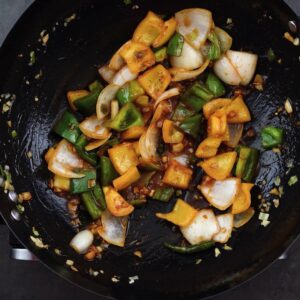
- Stir in the soy sauce, chili sauce, ketchup, black pepper powder, brown sugar, and a small pinch of salt. Toss the vegetables thoroughly to ensure every piece is coated with the sauces. Adjust the salt as needed, keeping in mind that soy sauce already adds saltiness.
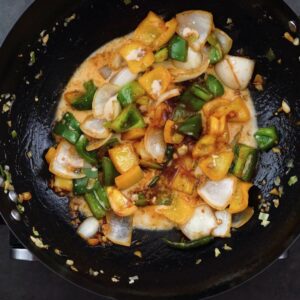
- Slowly pour in the cornstarch slurry (cornstarch mixed with water) while stirring the mixture constantly to avoid lumps. Stirring helps the sauce thicken evenly. Let it cook for 1 to 2 minutes until the sauce turns glossy and coats the vegetables well.
- Add the fried paneer to the wok. Gently toss the paneer with the sauce and vegetables, being careful not to break the pieces. Let the paneer warm up in the sauce for a minute to absorb the flavors, but don’t let it sit too long to avoid losing its texture.
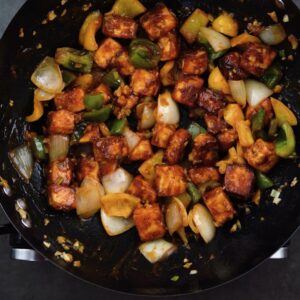
- Garnish generously with chopped spring onions to add a fresh, vibrant touch to the dish. Remove the wok from the heat to prevent overcooking. Your Chilli Paneer is now ready to serve and enjoy!
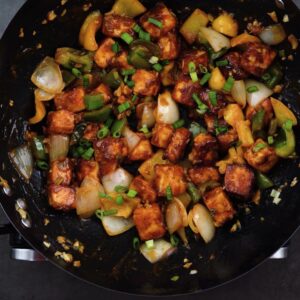
Serving
- Serve the Chilli Paneer immediately to enjoy its best flavor and texture while it's still warm. It pairs wonderfully with fried rice, noodles, or steamed rice. For more pairing options, check the Serving Suggestions section below to create a complete and satisfying meal.

Notes
Here are some handy tips to help you make the best Chilli Paneer that everyone will love:
- Using Fresh Ingredients: Fresh vegetables like crisp bell peppers and vibrant spring onions elevate the dish’s flavor and texture. Avoid limp or overripe vegetables, as they can affect the dish’s quality and overall appeal. Always wash and pat dry the vegetables thoroughly to prevent extra moisture during stir-frying.
- Soft Paneer: Fresh paneer, whether homemade or store-bought, gives the best texture. To keep it soft and moist, marinate the paneer immediately after cutting to lock in its natural moisture. If you're not marinating right away, soak the paneer in warm water until ready to use. This step prevents the paneer from becoming dry or rubbery, especially during frying or stir-frying.
- Consistency of Sauce: Adjust the cornstarch slurry to get your preferred sauce texture. For a thicker sauce, slightly increase the cornstarch in the slurry, but add it gradually to avoid over-thickening. If you prefer a lighter, runnier sauce, mix in a little water or vegetable stock.
- Avoid Over-Thickening Sauce: Cornstarch-based sauces tend to thicken further as they cool. To avoid an overly thick sauce, keep it slightly thinner during cooking. Stirring the sauce constantly as it simmers will help achieve a smooth, even consistency that coats the paneer and vegetables beautifully.
- High-Heat Stir Frying: Stir-frying on high heat ensures quick cooking, preserving the natural crispness of the vegetables and the tenderness of the paneer. Cooking at lower heat may release excess moisture, leading to soggy vegetables and paneer. Keep the heat consistent and toss the ingredients frequently to avoid burning.
- Preparation is Key: Stir-frying is a fast process, so have all your ingredients—vegetables, sauces, and seasonings—prepped and ready before you start. Chop the veggies, mix the sauces, and keep everything within reach. This avoids delays and helps you achieve perfectly cooked vegetables and paneer without overcooking.
- Spice Adjustment: Tailor the spice level to match your taste preferences. For milder flavors, reduce the chili sauce or skip the green chilies entirely. If you love heat, add extra chili sauce, finely chopped green chilies, or sprinkle red chili flakes. Balancing the heat is key to making the dish enjoyable for everyone.
- Cookware Choice: A traditional wok is ideal for this recipe because it distributes heat evenly and retains the high temperature needed for quick stir-frying. If you don’t have a wok, a large non-stick or stainless-steel pan can work well, but make sure it's wide enough to allow the ingredients to cook evenly without overcrowding.
- Paneer Variations: If paneer isn’t available, firm tofu is an excellent substitute. Press the tofu well to remove excess water, ensuring it holds its shape during cooking. Marinate the tofu just like paneer for similar flavors and fry it lightly to create a satisfying texture.
- Vegan Option: For a vegan version, substitute paneer with tofu and use vegan-friendly sauces. Double-check labels on soy sauce, chili sauce, and ketchup to ensure they are free from animal products. Vegan versions of this dish can be just as flavorful and satisfying.
Nutrition
Serving: 1serving | Calories: 529kcal | Carbohydrates: 16g | Protein: 21g | Fat: 43g | Saturated Fat: 21g | Polyunsaturated Fat: 3g | Monounsaturated Fat: 6g | Trans Fat: 0.04g | Cholesterol: 87mg | Sodium: 1278mg | Potassium: 99mg | Fiber: 2g | Sugar: 3g | Vitamin A: 96IU | Vitamin C: 21mg | Calcium: 647mg | Iron: 1mg
Visit the Recipe
Want to view the full post? Simply scan the QR code with your camera and tap the link.
