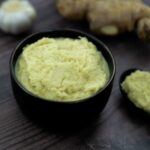
Ginger Garlic Paste
Ginger garlic paste is a key component in Indian cuisine, enhancing a variety of dishes like curries and biryanis with its rich flavors and aromas. This vegan-friendly condiment, made from freshly ground ginger and garlic, brings depth and zest to both vegetarian and non-vegetarian recipes.
Ingredients
- 1 cup Ginger peeled and chopped
- 1 cup Garlic peeled
- ¼ cup Oil any neutral-tasting cooking oil
Instructions
Preparing Ginger Garlic paste
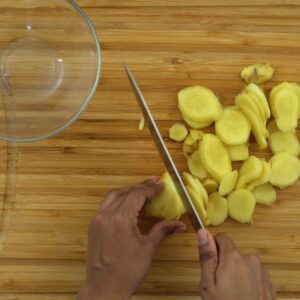
- Start by thoroughly cleaning the ginger. Peel it using a spoon, which helps minimize waste, and then chop it into medium-sized pieces.
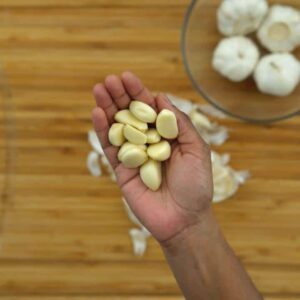
- Next, peel the garlic cloves. For a quick method, trim the ends off, place them in a jar, seal it, and shake vigorously. This helps to loosen the skin, making them easier to peel.
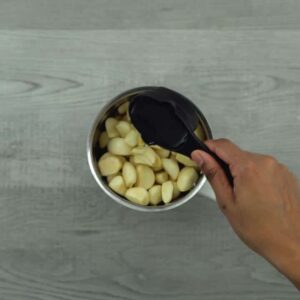
- Transfer the prepared ginger and garlic into a blender. Add a small amount of oil to smooth the blending process.
- Blend everything together until you achieve a smooth, consistent paste.
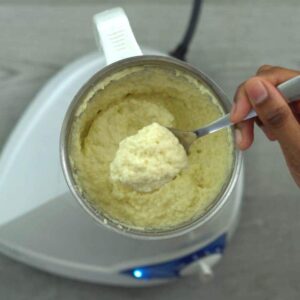
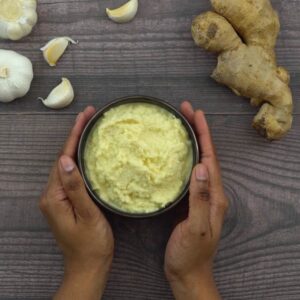
- Once finely ground, your ginger garlic paste is ready to be used in various recipes or stored for later use.
Storing or Using
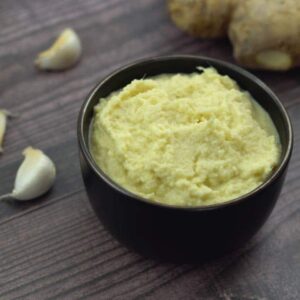
- To keep your ginger garlic paste fresh, store it in a clean, dry airtight jar. It can be refrigerated for up to a month or frozen for up to six months. For tips on how to use this versatile condiment in your dishes, check out our 'How to Use' section, where you'll find recipes that feature ginger garlic paste.
Notes
Here are some top tips to help you make the perfect ginger garlic paste right in your own kitchen:
- Ginger to Garlic Ratio: Use a 1:2 ratio of organic ginger to garlic to minimize bitterness. For regular ginger, a 1:1 ratio ensures a well-balanced flavor and texture.
- Garlic Preparation: Choose larger garlic cloves for easier peeling and more yield. For a quick peeling hack, shake the cloves in a sealed metal container or use a silicone garlic peeler. To peel ginger efficiently without waste, scrape the skin off with the edge of a spoon.
- Natural Preservatives: Extend the freshness of your paste with natural preservatives like oil, turmeric, salt, or vinegar. I typically use oil for its neutral flavor, but experimenting with these options can enhance preservation.
- Fresh Alternatives: If you’re out of paste, substitute with finely chopped ginger and garlic. For every 2 teaspoons of paste, use 2 teaspoons of chopped ginger and 3 teaspoons of chopped garlic.
- Powdered Option: In urgent situations, replace fresh paste with equal amounts of ginger and garlic powder to achieve a comparable flavor.
- Preventing Color Change in Paste: If your ginger garlic paste turns green, it might be reacting with air or acidic ingredients like lemon or vinegar. This color change is harmless and doesn't affect the paste's safety for consumption, as long as it's stored properly and used within its shelf life.
- Avoiding Bitterness in Cooking: If your curry tastes bitter after adding ginger garlic paste, it might be due to using too much paste or having an imbalance in the ginger to garlic ratio. Stick to recommended proportions to ensure the best flavor in your dishes.
Nutrition
Serving: 2tsp | Calories: 15kcal | Carbohydrates: 1g | Protein: 0.2g | Fat: 1g | Saturated Fat: 0.1g | Polyunsaturated Fat: 0.3g | Monounsaturated Fat: 1g | Trans Fat: 0.004g | Sodium: 1mg | Potassium: 19mg | Fiber: 0.1g | Sugar: 0.1g | Vitamin A: 0.2IU | Vitamin C: 1mg | Calcium: 5mg | Iron: 0.1mg
Visit the Recipe
Want to view the full post? Simply scan the QR code with your camera and tap the link.
