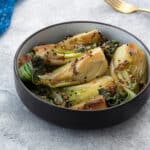
How to Cook Bok Choy
Discover how to cook healthy bok choy with our straightforward recipe. Using basic Asian pantry staples and aromatics, this sautéed bok choy makes a tasty side dish that complements rice, meats, or soups beautifully, ideal for both lunch and dinner.
Ingredients
- 1 lb Baby Bok Choy
- 1 tbsp Soy Sauce
- 1 tsp Rice Vinegar
- 2 cloves Garlic minced
- 2 tsp Sesame Oil
- ½ tsp Chili Flakes
- Sesame Seeds white and black seeds, for garnishing
- Salt to taste, if needed
- 2 tbsp Olive Oil
Instructions
Preparing Bok Choy
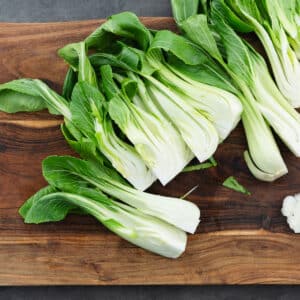
- Start by trimming the hard stems from your baby bok choy, then quarter them using a knife, as shown in the picture. Place the quartered bok choy in a colander, wash thoroughly under running water to remove any dust, mud, and debris, and pat dry them well after washing.
Cooking Bok Choy (Sautéed Method)
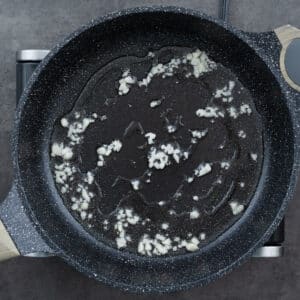
- Heat oil in a pan over medium-high heat. Add the garlic and sauté until aromatic, but be careful not to burn it to preserve its natural garlicky flavor.
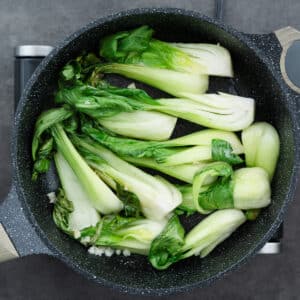
- Add the washed bok choy to the pan, making sure not to overcrowd it, as this can cause the vegetables to steam rather than sauté.
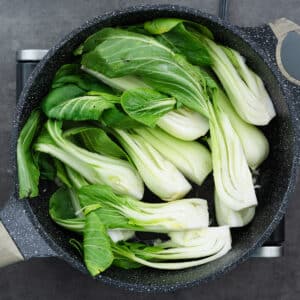
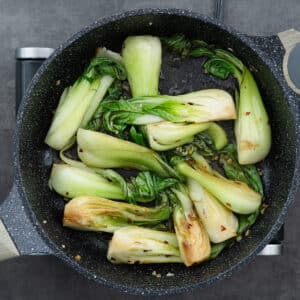
- Sear the bok choy for 2 minutes, then flip and continue to sear the other side for an additional 2 minutes, or until the stalks have a light charred appearance.
- Add soy sauce, vinegar, sesame oil, chili flakes, and, if needed, a pinch of salt to the pan. Sauté for 1-2 minutes, or until the seasoning is well distributed and the flavors are well incorporated.
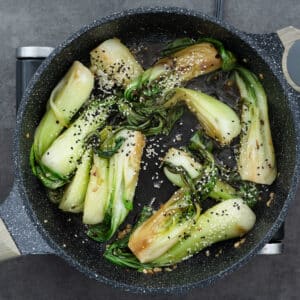
- Garnish the sautéed bok choy with both white and black sesame seeds, then remove from heat. Your dish is now ready to enjoy.
Serving
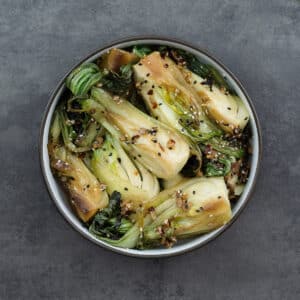
- Serve this sautéed Bok choy alongside your favorite rice dishes, noodles, or soups. For more pairing ideas, be sure to check out the serving suggestions section below.
Notes
Here are some essential tips to help you cook Bok Choy perfectly every time:
- Wash Thoroughly: It’s important to wash your bok choy thoroughly to remove any dirt, as it often gets trapped in the stalks. I recommend cutting the bok choy first, then rinsing each piece under running water to make sure it’s completely clean.
- Cook in Batches: When cooking a large quantity of bok choy, use a wide pot or cook in batches. This prevents overcrowding in the pan, which can cause the bok choy to steam instead of sauté, helping with even cooking and maintaining the texture.
- Add Stems First: If you're using a larger variety of bok choy, begin by sautéing the stems first as they take longer to cook. After a few minutes, add the leaves to the pan.
- Sear and Stir: Start by searing the bok choy over medium-high heat to achieve a nice sear. Continue sautéing with the appropriate seasonings to preserve its texture and enhance its flavor.
- Customize Your Seasoning: I've kept the seasoning simple here, but feel free to personalize it. Drizzle some chili oil or add hot sauce for extra spice, or include crushed peanuts or your favorite nuts for a crunchy texture.
- Salt Check: Since regular soy sauce is used, which is already salty, additional salt wasn't necessary. However, adjust the salt to your taste if needed.
Nutrition
Serving: 1serving | Calories: 100kcal | Carbohydrates: 3g | Protein: 2g | Fat: 9g | Saturated Fat: 1g | Polyunsaturated Fat: 2g | Monounsaturated Fat: 6g | Sodium: 330mg | Potassium: 21mg | Fiber: 1g | Sugar: 1g | Vitamin A: 5120IU | Vitamin C: 52mg | Calcium: 129mg | Iron: 1mg
Visit the Recipe
Want to view the full post? Simply scan the QR code with your camera and tap the link.
