
Mashed Potatoes
Learn to make buttery, rich, and creamy mashed potatoes with our simple recipe. Made with starchy russet potatoes, butter, milk, and basic seasonings, they’re perfect as a side dish with roasted, fried, or grilled meats and vegetables. These mashed potatoes are ideal for serving on festive occasions like Thanksgiving, Christmas, or any cozy family meal.
Ingredients
- 6 Russet Potato or half Russet and half Yokuon Gold variety
- Water enough to cook potatoes
- 4 cloves Garlic crushed
- 8 tbsp Unsalted Butter
- ¾ cup Whole Milk
- Salt to taste
- Black Pepper Powder to taste
- Cilantro Leaves or chives , to garnish
Instructions
Preparing Potatoes
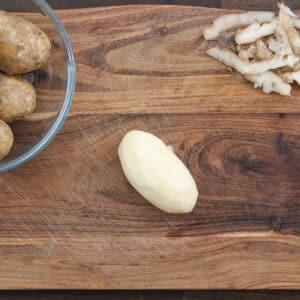
- Start by washing your potatoes thoroughly, scrubbing the skin with a brush to remove any mud and debris, then pat them dry. Next, use a peeler to remove the skin carefully for a smoother mashed potato texture. If you prefer a bit of texture or added nutrients, feel free to leave the skin on.
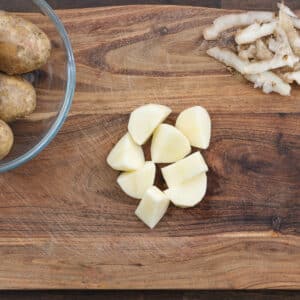
- Cut the peeled potatoes into medium-sized, even chunks. Cutting them uniformly helps the potatoes cook evenly and more quickly, so each piece becomes tender without any parts being overcooked or undercooked.
Preparing Milk Butter Mixture
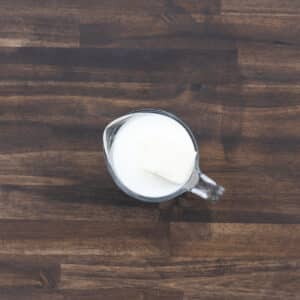
- In a measuring cup or bowl, combine the milk and butter. Heat the mixture on the stovetop or in the microwave until the butter melts, then set it aside for later. Warming the milk and butter creates a rich, creamy blend that enhances the texture and flavor of your mashed potatoes, while cold ingredients can cool down the potatoes and make it harder to achieve a smooth, fluffy texture.
Cooking Potatoes
- In a wide pot, add all the chopped potatoes and fill it with cold water until they’re fully submerged. Starting with cold water is key, as it allows the potatoes to cook evenly from the outside to the inside. Add the crushed garlic and season with salt to taste.
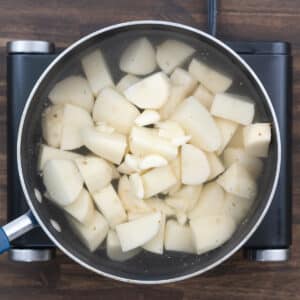
- Bring the potatoes to a gentle simmer over medium heat, allowing them to cook for about 15 to 20 minutes. This steady simmer helps cook the potatoes through without breaking them apart. Stir occasionally to prevent sticking and promote even cooking.
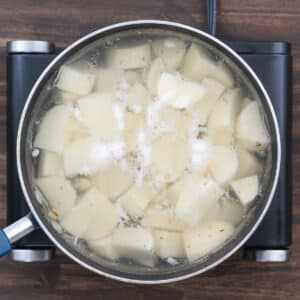
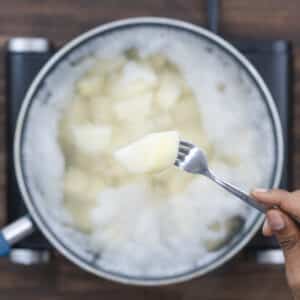
- After 15-20 minutes, check for doneness by inserting a fork into one of the pieces. If the fork slides in easily, the potatoes are tender and ready for mashing. This check is essential for achieving the right texture.
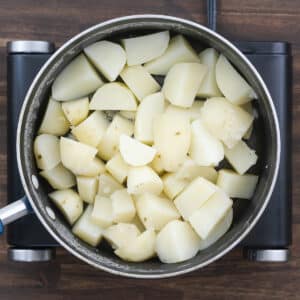
- Once cooked, remove the pot from the heat and drain the potatoes thoroughly to remove any excess water. Return the drained potatoes to the pot and place it back on the stove over low heat for 1-2 minutes. Gently shake the pot to help any remaining moisture evaporate. This step helps prevent watery mashed potatoes, giving you a creamier, fluffier texture when mashed.
Mashing the Potatoes
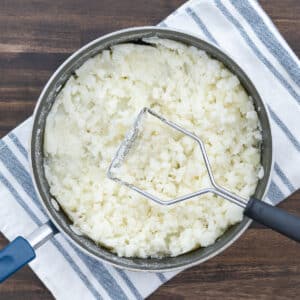
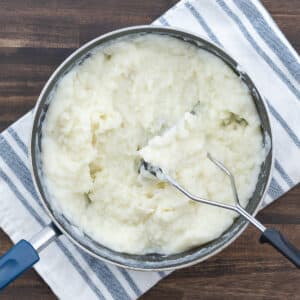
- Remove the pot from the stove and place it on a heatproof surface, using a towel underneath for added stability and heat protection if needed. With a potato masher, mash the potatoes until they’re mostly broken down, leaving a few small chunks as shown in the image below. You’ll mash them further after adding the milk mixture.
- Add the warmed milk and butter mixture that you prepared earlier, incorporating it in batches to blend evenly with the potatoes. Gently fold the potatoes and milk mixture together with a spatula until everything is well combined. After adding all the milk mixture, you can mash the potatoes again for a creamier texture if you like. If you prefer some texture, leave a few small chunks intact—it’s all about personal preference!
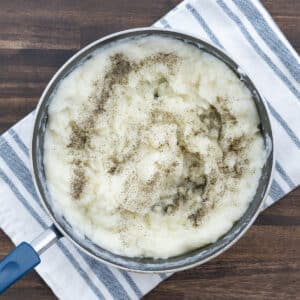
- Season the mashed potatoes with black pepper and mix well. Taste the potatoes and add salt as needed to suit your preference. And there you have it—your perfectly mashed potatoes are ready to enjoy!
Serving
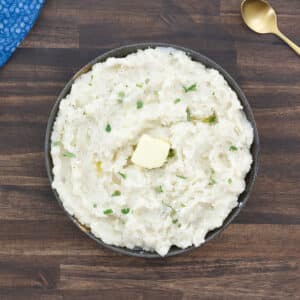
- Serve these creamy mashed potatoes as a side dish with your favorite roasted turkey, chicken, steak, or vegetables. For more pairing ideas, check out the Serving Suggestions section below!
Notes
Here are some useful tips to help you make perfect mashed potatoes every time. Take a look:
- Choose the Right Potatoes: To achieve that creamy, smooth texture, I recommend using russet potatoes for their rich starch content, which creates a light and fluffy mash. Alternatively, you can mix Yukon Gold and russets for a deliciously balanced flavor and texture. When selecting your potatoes, also look for those that are blemish-free and firm to the touch, as this indicates freshness and the best quality.
- Chop the Potatoes Evenly: Cutting potatoes into medium-sized cubes helps them cook quickly and evenly, resulting in a fluffy, creamy texture for your mashed potatoes. While you can boil whole potatoes, it takes longer, and larger pieces can be harder to mash smoothly, often leaving a chunkier consistency. For the best results, I recommend using cubed potatoes.
- Maintain Steady Heat: I must say that cooking the potatoes over medium heat is key to achieving that perfect texture. A gentle simmer lets the potatoes cook through evenly without turning mushy. Vigorous boiling can break them down too fast, giving you a mushy texture. Keeping a steady simmer helps the starches stay intact, resulting in a creamier mash.
- Do Not Overcook: Always cook the potatoes until they are tender and easily pierced with a fork. Overcooking can cause the potatoes to become waterlogged, which leads to a gluey texture when mashed. Additionally, overcooked potatoes can break apart too easily, making it challenging to achieve the desired smoothness.
- Avoid Overmixing: After mashing, gently fold in the heated milk and butter to keep the texture light and fluffy. Overmixing can break down the starches, resulting in a gummy texture. For a smoother finish, mash lightly, but avoid overworking.
- Mash with the Right Tool: For the best results, use a potato masher or ricer. A hand mixer can also work but avoid using a food processor, as it can break down the starch too much and lead to a gluey consistency.
- Adjust Creaminess to Your Liking: If you prefer an extra creamy texture, feel free to add a splash more milk or even some heavy cream. For a slightly thicker mash, use less liquid and add a dollop of sour cream or cream cheese for richness.
- Keep Potatoes Warm: If you’re making mashed potatoes a bit ahead of time, you can keep them warm in a slow cooker on the "warm" setting or by covering the pot and placing it over a pot of simmering water to prevent them from cooling too quickly.
- Experiment with Seasonings: While salt and black pepper are classics and provides perfect output, feel free to experiment with garlic or onion powder for added depth, or try sour cream or cream cheese for creaminess. For a bit of heat, add a dash of paprika or cayenne pepper—mix and match to find your favorite flavor combination.
- Storage and Reheating: Mashed potatoes are a great make-ahead side, especially for festive occasions. Check our dedicated storage and reheating section below for tips on keeping them fresh, whether preparing in advance or reheating leftovers.
Nutrition
Serving: 1serving | Calories: 388kcal | Carbohydrates: 49g | Protein: 7g | Fat: 20g | Saturated Fat: 12g | Polyunsaturated Fat: 1g | Monounsaturated Fat: 5g | Trans Fat: 1g | Cholesterol: 53mg | Sodium: 30mg | Potassium: 1136mg | Fiber: 3g | Sugar: 3g | Vitamin A: 622IU | Vitamin C: 15mg | Calcium: 88mg | Iron: 2mg
Visit the Recipe
Want to view the full post? Simply scan the QR code with your camera and tap the link.
