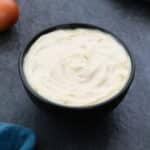
Mayonnaise
Mayonnaise, known for its creamy texture, combines eggs, oil, mustard, vinegar, and lemon juice. This versatile condiment enhances fried chicken, seafood, and salads, and serves as a base for favorites like tartar sauce, aioli, remoulade, honey mustard, and coleslaw dressing, enriching a variety of dishes.
Ingredients
- 1 Egg room temperature
- 1 cup Canola Oil
- 1 tbsp Vinegar
- 1 tsp Lemon Juice
- 1 tsp Dijon Mustard
- ½ tsp Salt to taste
Instructions
Method 1: Making Mayonnaise with an Immersion Blender
- In a jar suitable for immersion blending, add a room-temperature egg, canola oil, vinegar, lemon juice, Dijon mustard, and salt.

- Insert the immersion blender into the jar, ensuring it covers the egg yolk. Blend on high speed for 10 to 15 seconds, moving the blender slightly up and down. Continue until the oil begins to emulsify and the mixture starts to thicken.
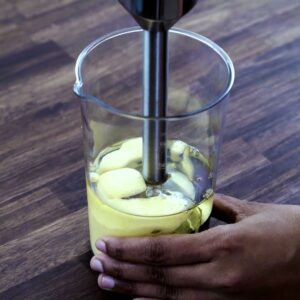
- Keep moving the blender up and down until the mayonnaise is fully emulsified and fluffy, with stiff peaks forming. Your homemade mayo is now ready to enjoy or can be stored for later use.

Serving
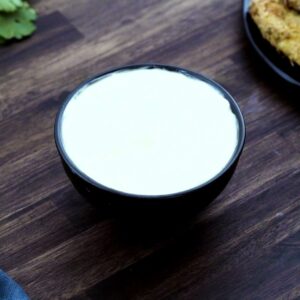
- Enjoy this fluffy homemade mayo as a delicious dip for fried chicken or fish. It's also perfect for creating other sauces. For more pairing ideas, check out our Serving Suggestions section below.
Notes
Here are some tips to customize your homemade mayonnaise to your taste:
- Temperature Matters: For the best results, make sure all ingredients, including eggs and oil, are at room temperature. This ensures a smoother and more stable emulsion.
- Acidic Balance: Incorporate lemon juice or vinegar not just for added flavor, but also to stabilize the emulsion and prevent the mayo from separating.
- Gradual Oil Addition: Add the oil very slowly, especially at the beginning, to ensure it fully emulsifies with the egg. This method prevents the mayonnaise from breaking and results in a thicker consistency. However, in this recipe, I added the oil all at once and it still turned out great! So, feel free to choose the method that works best for you.
- Room to Experiment with Oils: Experiment with different types of oil to find your preferred taste. For instance, olive oil can give a robust flavor suitable for certain dishes, while a more neutral oil like grapeseed offers versatility.
- Add an Extra Yolk: For an even richer and creamier mayonnaise, consider using an extra egg yolk. This can be particularly useful if you're planning to use the mayonnaise in recipes where a thicker consistency is desirable.
- Alternate Methods: Check out the additional instructions I've included on making mayonnaise using different methods such as whisking and a food processor. These variations can offer different textures and flavors.
Nutrition
Serving: 2tbsp | Calories: 256kcal | Carbohydrates: 0.1g | Protein: 1g | Fat: 29g | Saturated Fat: 2g | Polyunsaturated Fat: 8g | Monounsaturated Fat: 18g | Trans Fat: 0.1g | Cholesterol: 20mg | Sodium: 160mg | Potassium: 9mg | Fiber: 0.03g | Sugar: 0.05g | Vitamin A: 30IU | Vitamin C: 0.2mg | Calcium: 4mg | Iron: 0.1mg
Visit the Recipe
Want to view the full post? Simply scan the QR code with your camera and tap the link.
