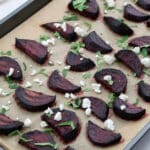
Oven Roasted Beets
Enjoy the sweet and caramelized flavors of our Oven Roasted Beets! With just a few simple seasonings and toppings, these roasted beets make a fantastic side dish for everyday family dinners or a hit at any gathering.
Ingredients
- 4 Beets
- 2 tbsp Olive Oil
- Salt to taste
- Black Pepper Powder to taste
- Feta Cheese for topping
- Cilantro Leaves or parsley, to garnish
Instructions
Preparing the Beets
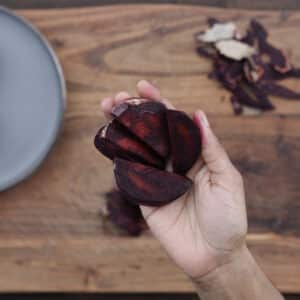
- Start by peeling your beets and cutting them into wedges, as shown in the pictures. If you prefer, you can leave the skin on and peel it after roasting. Cutting the beets into even pieces helps them cook quickly and evenly. If you're interested in roasting them whole, see the additional tips below for guidance.
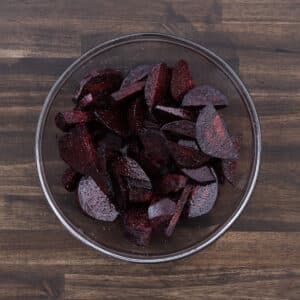
- Transfer the sliced beets to a mixing bowl and toss them with oil, black pepper, and salt. Make sure each piece is well coated. This not only enhances the natural sweetness of the beets but also prevents them from drying out while they roast.
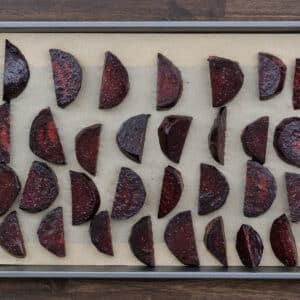
- Spread the seasoned beets in a single layer on a baking tray lined with parchment paper or foil. Avoid overcrowding the tray; if you’re roasting a large batch, it's best to use a second tray. Overcrowding can lead to steaming instead of roasting, potentially softening the beets too much and preventing them from achieving that delicious roasted edge. Using parchment or foil also makes cleanup afterward much easier.
Roasting the Beets
- Place the tray with the seasoned beets into a preheated oven at 400°F. Roast them for about 35 to 40 minutes, or until they are fork-tender. This timing is ideal for achieving beets with crispy edges and a beautifully caramelized interior.
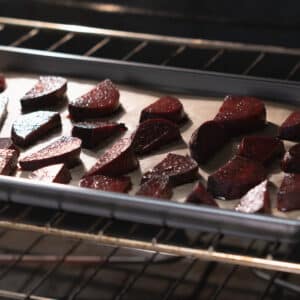
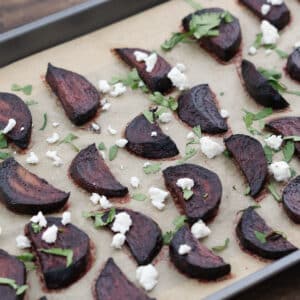
- After roasting, remove the beets from the oven and let them rest for 5 to 10 minutes. This allows the flavors to meld and the beets to cool slightly, making them easier to handle. When ready to serve, garnish the roasted beets with freshly chopped cilantro leaves and crumbled feta cheese for a burst of freshness and a tangy contrast to the sweet beets.
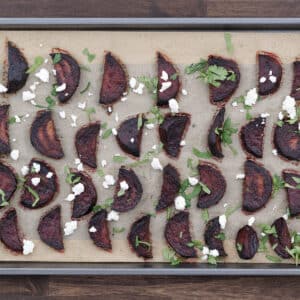
Serving
- These perfectly roasted beets are versatile and pair wonderfully with a variety of dishes. Serve them alongside rice or as a complement to proteins like chicken and seafood. They also make a nutritious addition to salads, bringing a rich, earthy flavor to your meal. For more creative pairing ideas, be sure to explore our Serving Suggestions section below!
Notes
Here are some helpful tips to perfectly Roast Beets every time:
- Choose Fresh Beets: For the best flavor, select fresh beets with smooth, shiny skin and no blemishes. Whether you opt for beets with greens attached (trim these before roasting) or pre-cut beets, both types are great for roasting. Don't throw away the greens if you have them—sauté them, add them to stir-fries, or toss them into salads for an extra boost of freshness.
- Peeling the Skin or Not: Roasting beets with their skin on can enhance their earthy flavor and simplify the initial preparation—just scrub and roast. After cooking, the skin peels off easily, which some find preferable. Alternatively, peeling the beets before roasting allows for immediate caramelization and the convenience of serving them right away without the extra step of peeling them hot.
- Wearing Gloves: To avoid beet stains on your hands, consider wearing gloves while peeling and cutting the beets. If gloves aren’t your thing, like me, try rubbing some oil on your hands before handling the beets. This creates a barrier against the color. Wash your hands with warm, soapy water afterward to remove any leftover stains.
- Roasting with Foil: Covering beets with foil isn't necessary, but it's an option if you prefer your beets juicier, similar to how you might roast garlic. Personally, I love roasting them uncovered to achieve a perfect crunch on the outside and a soft, caramelized inside. Feel free to experiment to see which method you prefer!
- Roasting the Beets Whole: If you like, you can roast the beets whole. This method intensifies their natural sugars and flavors, keeping them juicy and tender. Simply scrub the beets, pat them dry, season with salt and pepper, and wrap each one in aluminum foil. Roast at 400°F for about an hour or until fork-tender. This fuss-free approach not only simplifies preparation but also makes the beets easy to peel and slice for various dishes once they’re cool enough to handle.
- Roast in Batches: If you're working with multiple colors of beets (like red, golden, and chioggia), consider roasting them in separate foil packets or trays. This prevents the colors from bleeding into each other, ensuring that each beet type retains its vibrant hue.
- Check for Doneness: Different sizes of beets might require different cooking times. Test for doneness by inserting a fork into a beet. It should slide in easily if it's perfectly cooked.
Nutrition
Serving: 1serving | Calories: 130kcal | Carbohydrates: 10g | Protein: 2g | Fat: 10g | Saturated Fat: 1g | Polyunsaturated Fat: 1g | Monounsaturated Fat: 7g | Sodium: 85mg | Potassium: 355mg | Fiber: 3g | Sugar: 7g | Vitamin A: 36IU | Vitamin C: 5mg | Calcium: 18mg | Iron: 1mg
Visit the Recipe
Want to view the full post? Simply scan the QR code with your camera and tap the link.
