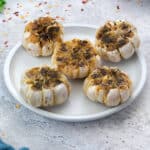
Roasted Garlic
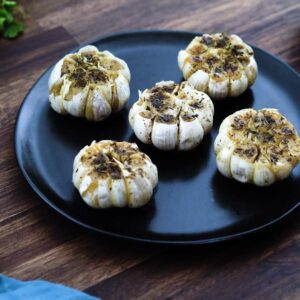
Roasted Garlic, known for its soft, golden cloves, offers a sweet, mild flavor. This is achieved by roasting whole garlic bulbs with simple seasonings, which enhance their natural flavors. It's perfect as a spread on bread and also adds depth to soups, stews, sauces, pasta dishes, and side dishes.
Ingredients
- 6 Heads Garlic
- Olive Oil a drizzle on each garlic head
- Salt to taste
- Black Pepper Powder a pinch for each garlic
- Dried Rosemary a pinch for each garlic
Instructions
Making Roasted Garlic
- Start by gently peeling away the outer layers of the garlic bulb, exposing the individual cloves without detaching them.
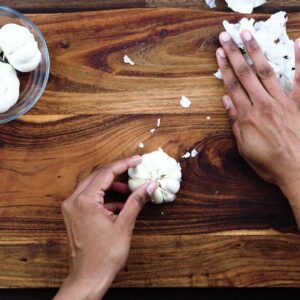
- Cut about ¼ to ½ inch from the top of each clove to expose the individual cloves. Refer to the image below for a visual guide.
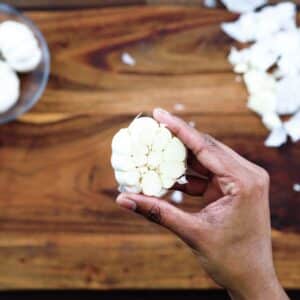
- Place the trimmed garlic bulbs on a sheet of aluminum foil. Generously drizzle with olive oil, and season with salt, black pepper, and dried rosemary.
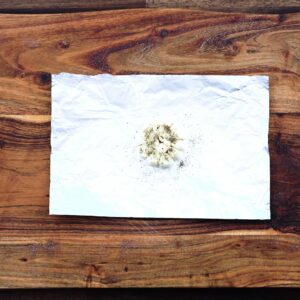
- Wrap them tightly to create a pouch, which seals in the flavors during roasting. Ensure each garlic head is wrapped individually in foil. Repeat this process with any additional garlic heads you have.
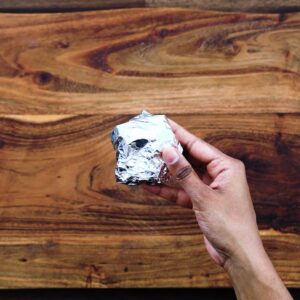
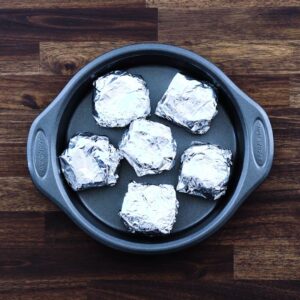
- Place the wrapped bulbs on a baking tray, ensuring they are spaced out to allow heat to circulate and roast the garlic evenly.
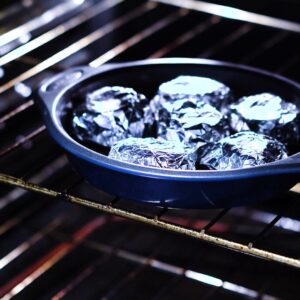
- Bake in a preheated oven at 400℉ (200℃) for about 30-40 minutes. Since ovens can vary, adjust the time accordingly. You're looking for the cloves to become soft, golden, and slightly caramelized.
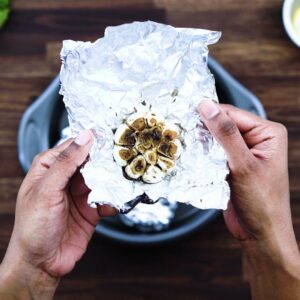
- After roasting, remove the garlic from the oven and let it cool until it's comfortable to handle. Gently unwrap the foil to reveal the soft, fragrant cloves. The roasted garlic is now ready to enhance any dish.
Serving
- Enjoy Roasted Garlic as a versatile flavor enhancer: perfect as a topping for bread, it elevates the taste of soups, stews, and mashed potatoes. It's also excellent for making garlic bread, enriching sauces, crafting aioli, and enhancing various side dishes. For more creative uses, check out our 'How to Use' section below.
Notes
Here are my top tips for making perfect Roasted Garlic:
- Choosing the Right Garlic: Select fresh garlic with large bulbs and tight, unbroken skin. Larger cloves are easier to handle and typically have a sweeter, more mellow flavor when roasted.
- Cutting the Cloves: Start by peeling and trimming ¼ to ½ inch off the top of each clove to expose the individual cloves. This ensures they roast evenly and makes it easy to squeeze out the soft garlic later.
- Alternative Wrapping: You can also use parchment paper instead of foil. The goal is to cover the cloves sufficiently to keep them moist and prevent them from drying out while roasting.
- Seasoning: The basics are olive oil, salt, and pepper, which help with caramelization and enhancing the garlic’s flavor. Don’t hesitate to try different herbs and spices to mix things up.
- Testing for Doneness: To check if the garlic is fully roasted, squeeze a clove; it should be soft enough to easily mash. If it's still firm, let it bake for a few additional minutes.
- Health Note: Roasted garlic is gentler on the stomach than raw garlic, making it a better option for those who are sensitive to raw garlic but still want to enjoy its flavor and health benefits.
Nutrition
Serving: 1serving | Calories: 42kcal | Carbohydrates: 9g | Protein: 2g | Fat: 0.1g | Saturated Fat: 0.02g | Polyunsaturated Fat: 0.1g | Monounsaturated Fat: 0.003g | Sodium: 5mg | Potassium: 112mg | Fiber: 1g | Sugar: 0.3g | Vitamin A: 3IU | Vitamin C: 9mg | Calcium: 51mg | Iron: 0.5mg
Visit the Recipe
Want to view the full post? Simply scan the QR code with your camera and tap the link.
