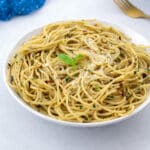
Spaghetti Aglio e Olio
Enjoy the rich, savory flavors of classic Italian Aglio e Olio with this simple recipe. Spaghetti is tossed in garlic-infused olive oil, creating a quick and satisfying meal for lunch or dinner. Pair it with crusty bread, grilled meats, seafood, or veggies for a well-rounded dish.
Ingredients
To Cook Pasta
- 8 oz Spaghetti Pasta
- Water enough quantity to cook pasta
- Salt to taste
For Aglio e Olio
- ¼ cup Olive Oil
- 8 cloves Garlic thinly sliced
- ½ tsp Chili Flakes
- Black Pepper Powder to taste
- 4 tbsp Parsley Leaves chopped
- Grated Parmesan Cheese to garnish
- Salt to taste
Instructions
Cooking Pasta
- Fill a wide pot with enough water and bring it to a boil over medium heat. Season with salt to enhance the pasta’s flavor. The salted water also helps the pasta cook evenly without becoming sticky or mushy.

- Add the spaghetti to the boiling water and let it sit for a few seconds to soften before stirring. This prevents the strands from breaking. Gently stir to fully submerge the pasta.
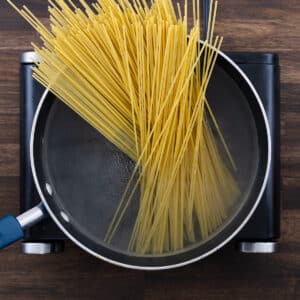
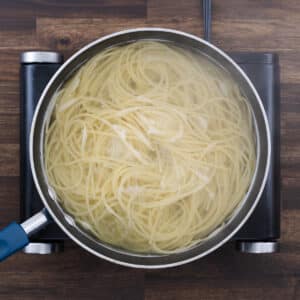
- Cook the spaghetti until it’s al dente—tender but with a slight bite. Stir occasionally to prevent sticking and make sure it cooks evenly.
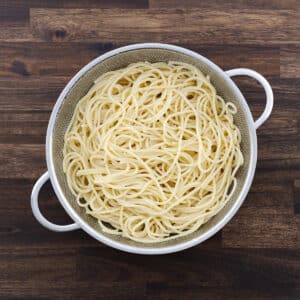
- Once the pasta is cooked, remove the pot from the heat and drain it using a colander. If needed, rinse it with cold water to stop the cooking process. Set it aside for later use.
Making Aglio e Olio
- Heat a pan over low-medium heat and add olive oil, sliced garlic, and chili flakes. Stir and cook until the garlic turns light golden. Keep an eye on it to prevent burning, as burnt garlic can affect the final taste.
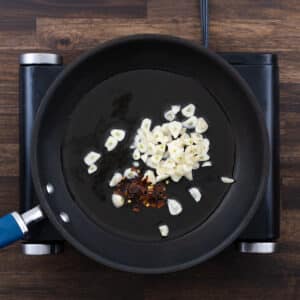
- Add the cooked spaghetti, salt, black pepper, and freshly chopped parsley to the garlic-infused oil.
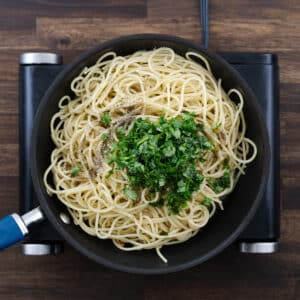
- Use tongs or a pasta fork to toss everything together, making sure the spaghetti is well coated with the garlic oil and seasonings. This helps distribute the flavors evenly. Once everything is mixed well, your Spaghetti Aglio e Olio is ready to serve and enjoy!
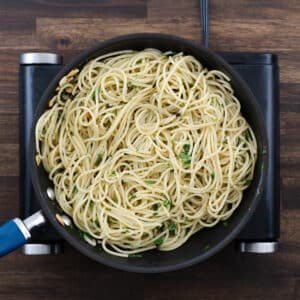
Serving
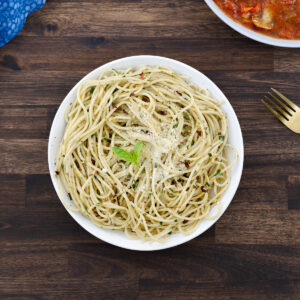
- Serve Spaghetti Aglio e Olio with freshly grated Parmesan, if desired, and pair it with your favorite sides like bread, roasted meats, chicken, seafood, or veggies for a satisfying meal. For more pairing ideas, check out the Serving Suggestions section below!
Notes
Here are some essential tips to make perfect Aglio e Olio every time:
- Use High-Quality Olive Oil: Since olive oil is the base of this dish, choosing a good-quality extra virgin olive oil makes all the difference. It enhances the flavor and gives the pasta a smooth, rich coating.
- Slice or mince the garlic properly: Thinly sliced garlic releases its flavor gradually, giving the oil a more subtle infusion, while minced garlic creates a stronger, more intense garlic taste. Choose based on how bold you want the garlic flavor to be.
- Cook the Garlic on Low Heat: Garlic is a key ingredient, and how you cook it affects the entire dish. Always sauté it over low to medium-low heat to allow the flavors to infuse into the oil without burning. If garlic browns too quickly or burns, it turns bitter and can ruin the dish.
- Reserve Pasta Water: Before draining the pasta, save about a cup of the starchy pasta water. While I haven’t used it in this recipe, you can add a splash if needed to adjust the sauce's consistency. The starch helps the oil coat the pasta more evenly, preventing it from pooling at the bottom of the plate. If the pasta feels dry after tossing, mix in a little pasta water until you reach the desired texture.
- Don’t Overcook the Pasta: The key to perfect Aglio e Olio is cooking the pasta al dente, meaning it should have a slight bite when you chew it. Overcooked pasta becomes mushy and won’t hold up well when tossed in the oil. To avoid this, follow the package instructions and start tasting the pasta a minute or two before the suggested cooking time.
- Cheese is optional: Traditional Aglio e Olio doesn’t include cheese, but if you prefer a richer, more savory flavor, you can sprinkle freshly grated Parmesan or Pecorino on top. These cheeses melt beautifully into the pasta, adding a creamy texture and a slightly salty, nutty flavor.
Nutrition
Serving: 1serving | Calories: 250kcal | Carbohydrates: 2g | Protein: 1g | Fat: 27g | Saturated Fat: 4g | Polyunsaturated Fat: 3g | Monounsaturated Fat: 20g | Sodium: 8mg | Potassium: 51mg | Fiber: 0.3g | Sugar: 0.1g | Vitamin A: 412IU | Vitamin C: 7mg | Calcium: 17mg | Iron: 1mg
Visit the Recipe
Want to view the full post? Simply scan the QR code with your camera and tap the link.
