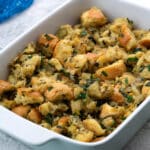
Stuffing
Enjoy the comforting flavors of homemade stuffing with this simple recipe. Made with crusty bread, savory broth, and an egg mixture, it’s perfect for stuffing turkey or chicken. You can also bake it separately as a hearty side dish, making it a must-have for holiday meals like Thanksgiving or Christmas!
Ingredients
For the Egg Mixture
- 2 Eggs beaten
- ½ cup Chicken Broth low sodium
For the Stuffing
- 16 oz Stale Bread cubed
- ½ cup Unsalted Butter
- 1 Onion chopped
- 4 ribs Celery Stalks chopped
- 5 cloves Garlic chopped
- ¼ cup Parsley chopped
- 3 tbsp Sage chopped
- 1 tbsp Rosemary chopped
- 1½ cups Chicken Broth low sodium
- Salt to taste
- Black Pepper Powder to taste
- 1 tbsp Butter for greasing the baking dish
Instructions
Making the Egg Mixture
- Start by cracking the egg into a bowl and adding the amount of broth listed in the ingredients for the egg mixture. Whisk them together thoroughly until well combined. Set this mixture aside for later, as it will be mixed with the bread to prepare the stuffing.

Sautéing Aromatics
- Heat a pan over medium heat and add the butter, letting it melt gently. Butter adds richness to the stuffing, so melt it slowly without letting it brown or burn.
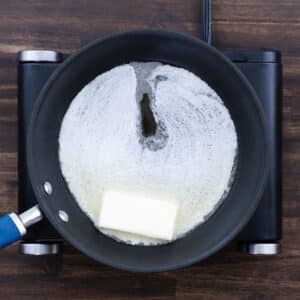
- Once the butter is melted, add the onion, garlic, and celery. Sauté them until they are soft and fragrant, releasing their natural sweetness and creating a flavorful base for the stuffing.
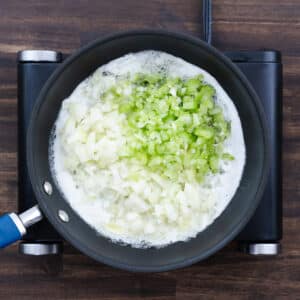
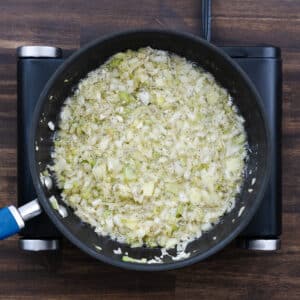
- Season the sautéed vegetables with salt and black pepper, stirring well to evenly distribute the seasoning and enhance the flavors. Remove the pan from the heat and allow the mixture to cool slightly. This cooling step is important to prevent the residual heat from scrambling the eggs when combined with the bread mixture in the next step.
Combining the Ingredients
- In a large mixing bowl, combine the cubed crusty bread, sautéed aromatics, and fresh herbs like rosemary, sage, and parsley. Toss everything gently to evenly coat the bread cubes with the flavorful mixture.
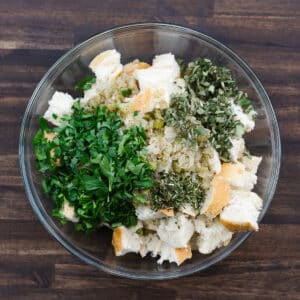
- Gradually pour the chicken broth into the bowl, mixing gently after each addition. This allows the bread to absorb the liquid evenly without becoming overly wet. Add just enough broth to moisten the bread while keeping its texture intact.

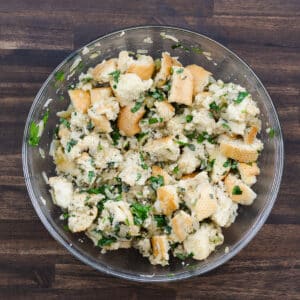
- Pour the egg mixture over the bread and fold it in gently, making sure all the bread pieces are evenly coated. The eggs bind the ingredients together, helping the stuffing hold its shape and bake into a firm, flavorful dish. Once combined, your stuffing is ready to go into the oven!
Baking the Stuffing
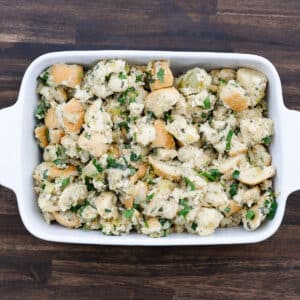
- Transfer the prepared stuffing to a greased baking dish and cover it tightly with aluminum foil to retain moisture while baking.
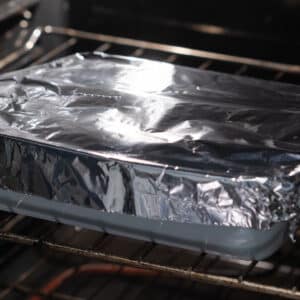
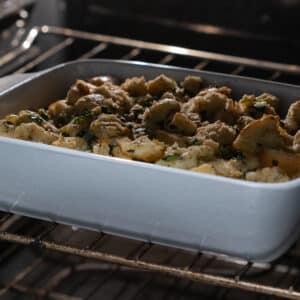
- Bake the stuffing, covered, at 350°F for about 35 minutes. This helps it cook through and stay moist, as the foil traps steam and allows the bread to absorb the broth. The covered baking helps keep the stuffing tender.
- After 35 minutes, remove the foil and return the dish to the oven. Bake for an additional 10-15 minutes. Check that the internal temperature reaches 165°F for safe consumption. If you prefer a crispy top, broil for the last few minutes. Your delicious stuffing is now ready to serve!
Serving
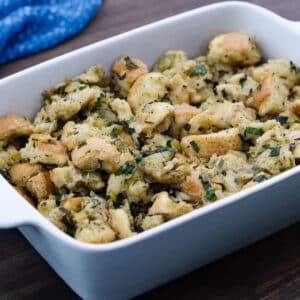
- Serve this stuffing as a side dish with your favorite roast turkey, chicken, or any other roasted meats for a delicious festive meal. For more pairing ideas, check out our Serving Suggestions section below!
Notes
Here are some helpful tips to make your stuffing turn out perfect every time:
- Use Stale or Toasted Bread: For the best texture, use slightly stale bread or toast fresh bread before making stuffing. Stale or toasted bread absorbs the broth better without turning soggy. If you’re using fresh bread, tear it into pieces and let it sit out for a day or two, or toast it quickly in the oven.
- Quickly Toast Bread in the Oven: If you’re using fresh bread and need to dry it out quickly, preheat your oven to 350°F (175°C). Cut the bread into cubes, spread them on a baking sheet, and toast for 10-15 minutes, flipping halfway through. This helps the bread absorb the liquids properly without becoming soggy.
- Cut Even Cubes: Cut the bread into evenly sized cubes, about 1 inch each, to help it absorb the broth evenly and hold its shape. A serrated knife is ideal, especially for crusty bread, as it prevents squashing. This ensures the stuffing’s texture and flavor are consistent throughout.
- Don’t Overmix: When mixing the bread, broth, and seasonings, do it gently to avoid making the stuffing dense. The bread should be evenly coated with the liquids but still have some texture and chunkiness.
- Adjust the Moisture: The secret to perfect stuffing is getting the right moisture level. The amount of broth you use depends on your preference—less for a slightly drier, crumbly texture, and more for a moist, soft stuffing. Feel free to add the broth gradually, stirring as you go, until the bread is just soaked through but still holds its shape.
- Avoid Removing the Foil Directly from the Oven: Don’t take off the aluminum foil while the baking dish is still in the oven. The heat from the dish or oven could cause burns. It’s safer to use oven mitts to take the dish out, remove the foil, and then put it back in for the final baking.
- Check Doneness: Use a food thermometer to check that the center of your stuffing reaches 165°F (74°C) as recommended by FDA for safe eating. The top should be golden and slightly crispy, while the inside stays moist but not soggy. If baking in a casserole dish, press gently to check for firmness or taste a small spoonful to confirm the texture and flavors are just right.
- Baking Dish Size: For this recipe, I used a 9x13-inch baking dish, which worked perfectly. If you're adjusting the serving size, be sure to use the right-sized dish to avoid overcrowding, as it can affect the texture and result in less-than-perfect stuffing.
- Customize to Your Liking: Get creative and make the stuffing your own! Add sausage, cranberries, nuts, or mushrooms for extra flavor and texture. These simple additions can give your stuffing a unique twist to suit your taste.
- For Gluten-Free Options: If you need a gluten-free alternative, replace regular bread with gluten-free bread or cornbread. Gluten-free bread is usually denser and absorbs liquid differently, so add the broth gradually. Start with a smaller amount, mixing gently, and add more as needed to avoid overly wet stuffing. Be sure to choose a bread or cornbread with a firm texture to help it hold together during mixing.
Nutrition
Serving: 1serving | Calories: 144kcal | Carbohydrates: 3g | Protein: 2g | Fat: 14g | Saturated Fat: 9g | Polyunsaturated Fat: 1g | Monounsaturated Fat: 4g | Trans Fat: 1g | Cholesterol: 76mg | Sodium: 253mg | Potassium: 70mg | Fiber: 0.5g | Sugar: 1g | Vitamin A: 658IU | Vitamin C: 4mg | Calcium: 27mg | Iron: 1mg
Visit the Recipe
Want to view the full post? Simply scan the QR code with your camera and tap the link.
