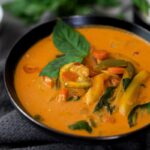
Thai Red Curry With Vegetables
This Thai Red Curry is a mildly spiced vegan-friendly dish made with fresh vegetables, red curry paste, and creamy coconut milk. Ready in 30 minutes, it pairs perfectly with rice or grains and can be customized with tofu, chicken, or your favorite protein.
Ingredients
- 1 ½ cup Coconut Milk unsweetened, use 1 part to sauté the curry paste and 2 parts for the curry
- 3 tbsp Red Curry Paste
- ¼ cup Green Bell Pepper
- ¼ cup Red Bell Pepper
- ¼ cup Yellow Bell Pepper
- ¼ cup Carrot
- ¼ cup Zucchini
- Salt to taste
- 1 cup Water
- 1 tbsp Soy Sauce
- 1 tsp Brown Sugar palm sugar is preferred
- ¼ cup Thai Basil Leaves
Instructions
Preparing Thai Red Curry
- Start by pouring ⅓ of coconut milk into a wok over medium heat. Stir continuously to prevent it from burning. You’ll notice the coconut milk will begin to separate and release some oil, which enhances the flavor. Keep stirring until the oil appears. Save the rest of the coconut milk for later.

- Add the red curry paste to the wok and stir it into the coconut milk. Let it cook for about 2 to 3 minutes until the aroma starts to develop.

- Toss in the chopped red, green, and yellow bell peppers, along with the carrots and zucchini. These vegetables add both color and texture. Sprinkle in salt over them and stir well to coat the veggies with the curry paste mixture.
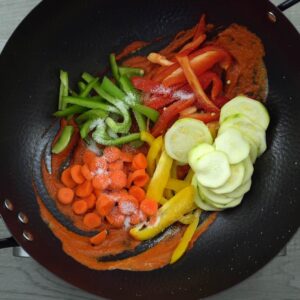
- Pour in the remaining coconut milk (⅔ rd), followed by a cup of water. Stir everything well so that the vegetables are fully covered in the liquid.
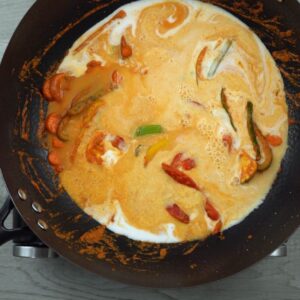
- Add soy sauce and palm or brown sugar to balance the flavors. Stir to combine. Taste the sauce and adjust the seasoning if necessary.
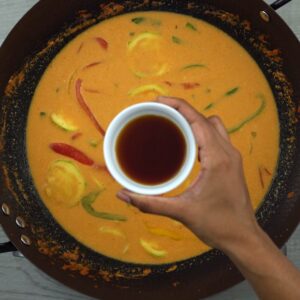
- Bring the curry to a gentle simmer. Let the vegetables cook in the coconut milk mixture for about 7 to 10 minutes, until they are tender but still slightly firm. Stir occasionally to keep the curry from sticking to the bottom.

- Lower the heat and let the curry cook gently for another 3 to 5 minutes. Just before finishing, add the Thai basil leaves and stir them in, allowing their fresh aroma to infuse the curry.
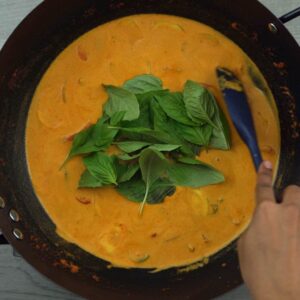
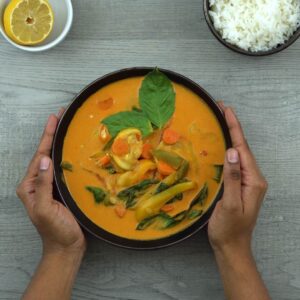
- Your flavorful Thai Red Curry with vegetables is ready! Serve it warm with rice or your favorite grains for a complete meal.
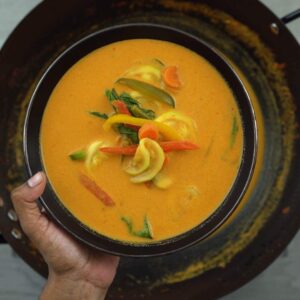
Serving
- Enjoy this flavorful Thai Red Curry alongside white rice or your favorite type of rice for a complete and satisfying meal. Be sure to check out our Serving Suggestions section below for more pairing ideas.
Notes
Here are some tips to make the perfect Thai Red Curry. Be sure to check out the variations section if you’d like to explore more options.
- Red Curry Paste: For the best flavor, use homemade Thai red curry paste. It's fresher and bolder than store-bought versions. You can check out my recipe linked above if you want to make it yourself.
- Store-Bought Curry Paste: If you’re using store-bought curry paste, it tends to be less intense. To give it a boost, sauté some onions, garlic, and ginger in oil before adding the paste. This extra step deepens the flavor and brings out the essential spices in the paste.
- Coconut Milk vs Coconut Oil: Sautéing the red curry paste in a bit of coconut milk brings out its fragrance. As the oils separate, it deepens the flavor and makes the curry base more aromatic. If you want to use less coconut milk, you can replace it with a little coconut oil in the first step.
- Cooking Vegetables Evenly: Cut your vegetables into similar-sized pieces so they cook at the same rate. Add firmer vegetables, like carrots and squash, earlier, and softer vegetables, like bell peppers or zucchini, later in the cooking process to avoid overcooking.
- Veggie Options: Bell peppers and zucchini are common in Thai curries, but you can swap or add vegetables like squash, broccoli, pumpkin, or even lentils. Squash and pumpkin provide a slightly sweet contrast to the spicy curry, while lentils make it heartier and more filling.
- Controlling the Consistency: If you prefer a thicker curry, you can reduce the amount of water or let the curry simmer uncovered for a little longer. For a thinner, soup-like curry, add a bit more water or coconut milk.
- Avoid Overcooking Basil: Add Thai basil leaves at the end of cooking to preserve their fresh aroma and delicate flavor. Overcooking basil can make it lose its vibrant taste and color.
- Spice Level: This recipe is mildly spiced, but if you prefer more heat, add a few slices of fresh red chili while sautéing. You can also sprinkle in some crushed red pepper flakes while cooking to give the whole dish an extra kick.
- Vegan-Friendly: The version I’ve shared is completely plant-based, making it great for a vegan meal. If you want more protein, you can add tofu, tempeh, or chickpeas. For more variations including non-vegan options, check out the variations section below for more details.
Nutrition
Serving: 1serving | Calories: 198kcal | Carbohydrates: 7g | Protein: 3g | Fat: 19g | Saturated Fat: 16g | Polyunsaturated Fat: 0.4g | Monounsaturated Fat: 1g | Sodium: 273mg | Potassium: 301mg | Fiber: 1g | Sugar: 2g | Vitamin A: 3469IU | Vitamin C: 40mg | Calcium: 41mg | Iron: 3mg
Visit the Recipe
Want to view the full post? Simply scan the QR code with your camera and tap the link.
