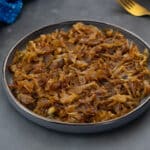
Caramelized Onions
Caramelized onions, known for their rich sweetness and deep brown color, are surprisingly simple to make and incredibly rewarding. They're perfect for both beginners and culinary experts, enhancing everything from soups and burgers to pizzas. All you need are onions, oil, salt, and a bit of patience.
Ingredients
- 5 Onions medium to large onions, choose the type of onion you prefer.
- 2 tbsp Olive Oil
- 2 tsp Salt
- 2 tsp Water or chicken broth, or vinegar
Instructions
Making Caramelized Onions
- Start by trimming the ends off the onions and peeling away the outer layers. Then, halve and slice them uniformly, making sure to separate the layers in each slice to ensure even cooking.
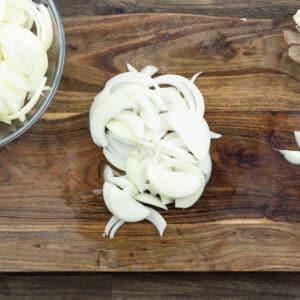
- Place a sturdy pan over medium-low heat and add olive oil along with the sliced onions. Sauté them until they start to soften, which should take about 10 minutes. The type of pan used, like ceramic or iron skillet, can affect the cooking time.
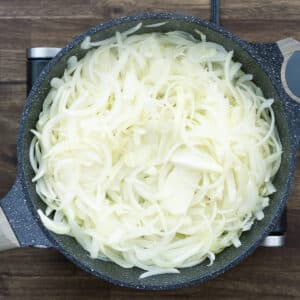
- After the onions have softened, sprinkle a pinch of salt over them and stir well to ensure the flavor is evenly distributed.
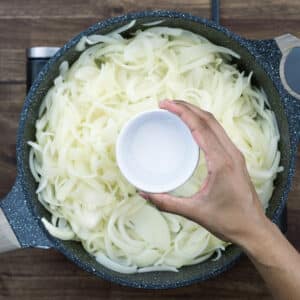
- Keep sautéing and stirring occasionally. By the 25-minute mark, the onions will become very soft, which is great for adding to curries, sautéed mushrooms, or creamy soups.
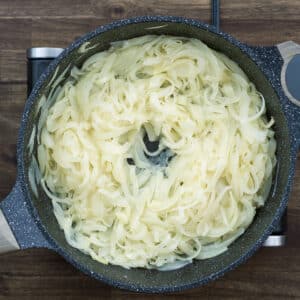
- Continue cooking, stirring occasionally. At around the 45-minute mark, the onions will turn golden, making them ideal for enhancing dishes like chicken fajitas, pastas, and sandwiches.
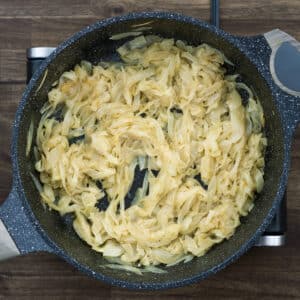
- After around an hour, the onions should reach a golden-brown color. If they begin to stick to the pan, add a splash of water, chicken broth, balsamic vinegar, or regular vinegar to deglaze and lift any flavorful bits from the pan.
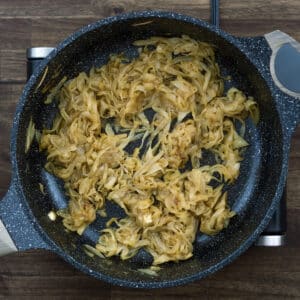
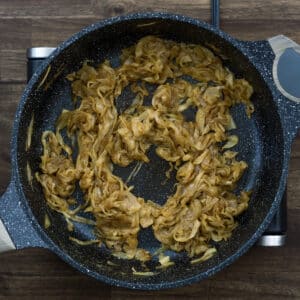
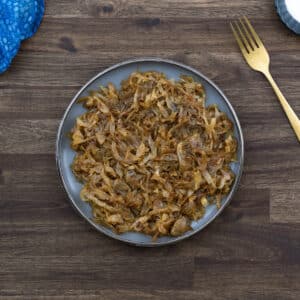
- Keep cooking until the onions deepen to a rich brown at around the hour and 30-minute mark, indicating they are fully caramelized. Turn off the heat. Now they are ready to use in your dishes or to be stored for later use.
Using
- Use caramelized onions to enhance a variety of dishes, from French onion soup and burger toppings to grilled cheese, green bean casserole, and sautéed dishes. They also make a delicious pizza topping. For more ideas, check out our 'How to Use' section below.
Notes
Here are my top tips to make perfectly caramelized onions every time:
- Choosing Onions: Yellow onions are best for caramelizing due to their ideal balance of sweetness and robust flavor. Red onions are also suitable for a slightly different, yet delicious, outcome. Avoid overly sweet onions like Vidalias, as they can become too sugary. Opt for larger onions since they are easier to slice uniformly and shrink less during the lengthy cooking process.
- Preparing the Onions: Begin by cutting off the roots and the stem, then peel away the outermost layer. This step ensures that your onions are clean and free from any tough, inedible parts.
- Slicing the Onions: Aim for uniform slices to ensure even cooking. Different thicknesses can cause the onions to cook unevenly, with thinner slices possibly burning before thicker ones caramelize.
- Slow Cooking and Patience: Perfect caramelization comes from low and slow cooking. Set your stove to medium-low and let the onions caramelize gradually. This process can take 45 minutes to an hour and a half. Resist the urge to turn up the heat; slow and steady wins the race, yielding onions with a deeper, richer flavor.
- Balancing Heat for Caramelization: While low heat is usually best for caramelizing onions, starting on medium heat to quickly soften the onions before switching to low can save time and still yield flavorful results. This method helps balance the heat to cook the onions thoroughly without charring.
- Stirring Occasionally: Stir the onions every now and then to help them cook evenly and prevent sticking. This doesn't need to be constant but enough to ensure they brown nicely on all sides.
- Choosing the Right Pan: The type of pan is key for caramelization. Thick-bottomed pans like ceramic or cast iron provide even heat and slow cooking, ideal for consistent results. Thinner pans, such as nonstick or stainless steel, heat up quickly and speed up the process. Select your pan based on how fast you want to cook and the results you want.
- Moderating Salt: Sprinkle a pinch of salt once the onions begin to soften. Salt is crucial as it helps draw out moisture from the onions, aiding in the caramelization process, but adding too much early on could make the onions watery.
- Manage Moisture and Deglaze as Needed: If the onions start to stick or catch on the pan, or if they begin drying out during cooking, simply deglaze with a small amount of water, broth, or a flavorful vinegar. This not only helps to release any caramelized bits stuck to the pan, preventing burning, but also ensures the onions stay moist and flavorful throughout the cooking process.
- Monitor the Color Changes: Keep a close eye on the onions as they cook, noting how they change from pale to golden and eventually to a rich, deep brown. These color changes are key indicators of the caramelization process and help you determine when the onions are perfectly caramelized.
Nutrition
Serving: 1serving | Calories: 58kcal | Carbohydrates: 6g | Protein: 1g | Fat: 4g | Saturated Fat: 1g | Polyunsaturated Fat: 0.4g | Monounsaturated Fat: 3g | Sodium: 294mg | Potassium: 100mg | Fiber: 1g | Sugar: 3g | Vitamin A: 1IU | Vitamin C: 5mg | Calcium: 16mg | Iron: 0.2mg
Visit the Recipe
Want to view the full post? Simply scan the QR code with your camera and tap the link.
