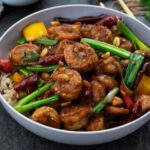
Kung Pao Shrimp
Kung Pao Shrimp is a vibrant and authentic dish from Sichuan cuisine that features succulent fried shrimp coated in a silky smooth Kung Pao sauce. Perfect for any meal, this homemade creation bursts with flavor and pairs beautifully with rice or noodles. Enjoy it as a hearty lunch or a delicious dinner.
Ingredients
For Marinating Shrimp
- 2 lb Shrimp cleaned and deveined
- 1 tsp Garlic Powder
- ¼ tsp White Pepper Powder
- 1 tbsp Cornstarch
- Salt to taste
For Sauce
- 3 tbsp Dark Soy Sauce
- 2 tbsp Light Soy Sauce
- 2 tbsp Shaoxing Wine
- 1 tbsp Rice Vinegar or regular white vinegar
- 1 tbsp Chili Sauce
- 1 tbsp Brown Sugar
For Frying Shrimp
- ½ cup Oil any neutral oil
For Kung Pao Shrimp
- ½ cup Sesame Oil adjust to your preference
- 2 tbsp Garlic minced
- 1 tbsp Ginger julienned
- 7 Thai Red chili optional
- 15 Red Chili dry, halved
- 3 tbsp Scallion white part, chopped
- ½ cup Onion chopped
- 1 tsp Sichuan Peppercorn crushed (use half if it is too strong for your taste buds)
- ¼ cup Red Bell Pepper
- ¼ cup Yellow Bell Pepper
- 1 tbsp Cornstarch for thickening the sauce
- 2 tbsp Peanuts roasted
- ½ cup Scallion green part
Instructions
Marinating the Shrimp
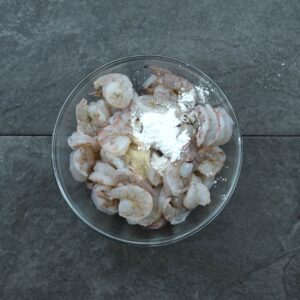
- Begin by placing the cleaned and deveined shrimp in a glass bowl. Sprinkle in garlic powder, white pepper powder, salt, and cornstarch for a flavorful coating.
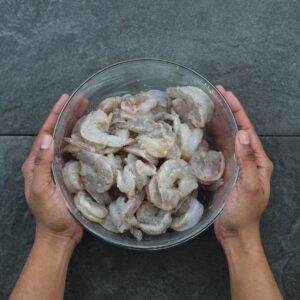
- Stir the shrimp until they are evenly coated with the seasoning. Let them rest for 5 minutes to absorb the flavors.
Making the Sauce
- In a bowl, combine dark soy sauce, Shaoxing wine, light soy sauce, rice vinegar, hot chili sauce, and brown sugar. Mix well to ensure all ingredients are thoroughly blended. This flavorful sauce will be reserved for later use in the recipe.

Frying the Shrimp
- Heat oil in a pan over medium heat, ensuring it's adequately hot but not smoking. Add the marinated shrimp, taking care not to overcrowd the pan. Fry them for 2 to 3 minutes, allowing them to develop a golden crust on one side.
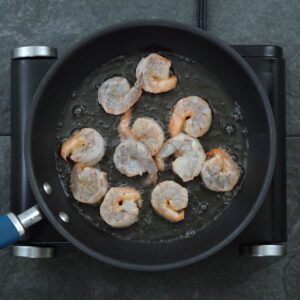
- Carefully flip the shrimp over using tongs or a spatula. Continue frying for another 2 to 3 minutes until they are cooked through and evenly golden on both sides. Avoid overcooking to prevent them from becoming tough and rubbery. Look for the shrimp to turn pink and opaque, indicating they are done.
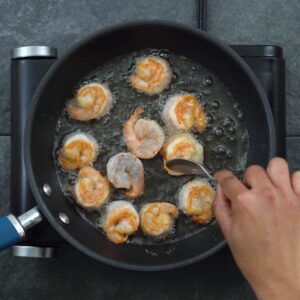
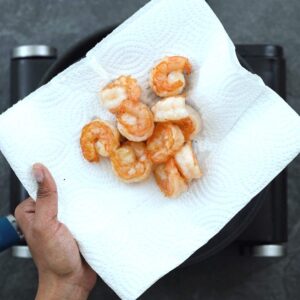
- Once fried to perfection, remove the shrimp from the pan and set them aside for later use in this recipe.
Preparing Kung Pao Shrimp
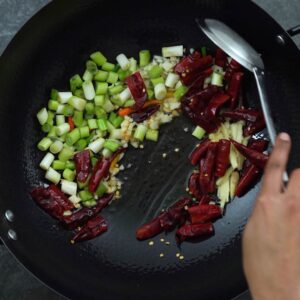
- Heat sesame oil in a wok over high heat. Add garlic, ginger, Thai red chilies, dry red chilies, and the white part of scallions. Sauté until fragrant, releasing their aromatic flavors.
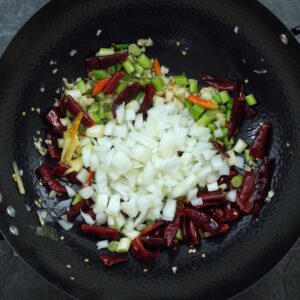
- Introduce onions to the wok and sauté until they turn soft and translucent. Then, stir in crushed Sichuan peppercorns, infusing the dish with their distinctive numbing sensation.
- Toss in the bell peppers and stir-fry them for 2 minutes, allowing them to retain their crispness and vibrant color.
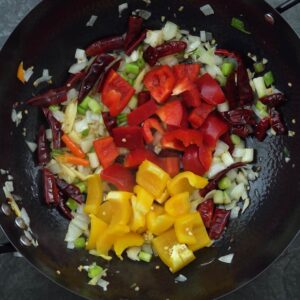
- Pour in the reserved Kung Pao Sauce, ensuring every ingredient is coated as you mix well. Allow the sauce to simmer and meld with the other ingredients for 1 to 2 minutes, enhancing the dish's depth of flavor.
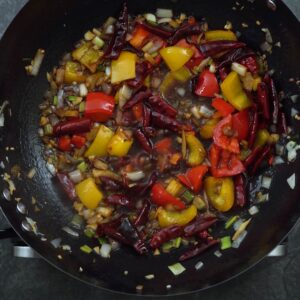
- Add cornstarch to thicken the sauce, creating a lusciously glossy texture. You can either sprinkle it directly or create a cornstarch slurry for even distribution (to make the cornstarch slurry, mix the cornstarch with water using a 1:3 ratio and incorporate it into the sauce).
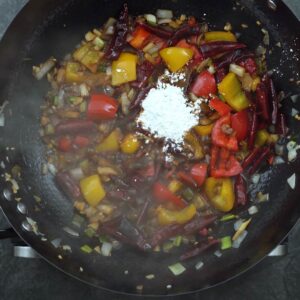
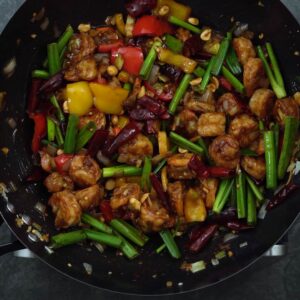
- Once the sauce has reached the desired consistency, add the fried shrimp to the wok, gently tossing them to coat evenly in the flavorful sauce.
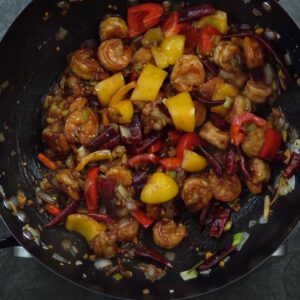
- Finish by sprinkling roasted peanuts and the green parts of the scallions over the dish, adding a final crunch and burst of freshness. Give everything a good stir to combine.
Serving
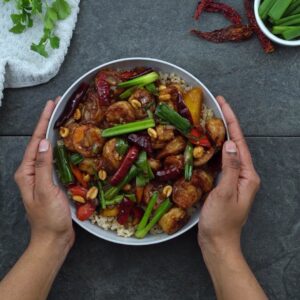
- Enjoy this authentic Kung Pao Shrimp with a variety of rice options to suit your taste. Pair it perfectly with white rice, brown rice, Schezwan fried rice, or noodles to make excellent accompaniments.
Notes
Here are my top tips for creating perfect Kung Pao Shrimp:
- Prepare Ahead of the Ingredients: Always use fresh shrimp and vegetables for the best flavor. Since stir-frying is a quick process, it’s crucial to have all your ingredients prepped and ready to go.
- Control Your Heat: High heat is key for that authentic stir-fry smokiness, but watch closely to avoid burning your garlic and spices. A bit of char adds depth, but too much can spoil the flavors.
- Kung Pao Sauce: This sauce is vital for giving your dish its bold, deep flavor. Never compromise on the quality of these ingredients.
- Watch the Cooking Time for Shrimp: Shrimp cook very quickly; add them toward the end of your stir-frying to avoid overcooking. They should be pink and slightly firm to the touch.
- Spice Level: Note that this dish tends to be on the spicier side due to the use of Thai red chili, red chili, and Sichuan peppercorns. To adjust the heat level, consider reducing the amount of red chili or Thai red chili used, or remove the seeds from the red chili. This way, you can tailor the dish to your preferred level of spiciness.
- Traditional Taste: While you can substitute Sichuan peppercorns with white pepper powder, I recommend using them if possible, as they are key to the dish’s unique flavor. If you're new to cooking with them, it's best to start with half the quantity of the peppers. They bring a mix of flavors, including heat, bitterness, and a numbing effect. Adjust to suit your spice level as you become more familiar with their unique taste.
- Balance Your Flavors: A good Kung Pao sauce balances sweet, sour, spicy, and savory. Adjust seasoning as needed for balance.
- Good Quality Wok: Using a high-quality iron wok or skillet is crucial as it imparts an earthy, rich flavor to your dish, much like what you’d experience in a Chinese restaurant.
Nutrition
Serving: 1serving | Calories: 358kcal | Carbohydrates: 29g | Protein: 52g | Fat: 5g | Saturated Fat: 1g | Polyunsaturated Fat: 2g | Monounsaturated Fat: 1g | Trans Fat: 0.01g | Cholesterol: 365mg | Sodium: 846mg | Potassium: 1373mg | Fiber: 4g | Sugar: 14g | Vitamin A: 2177IU | Vitamin C: 290mg | Calcium: 204mg | Iron: 4mg
Visit the Recipe
Want to view the full post? Simply scan the QR code with your camera and tap the link.
