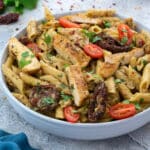
Pesto Chicken Pasta
Pesto Chicken Pasta is a one-pot meal that combines tender chicken, pesto sauce, penne pasta, and seasonings, all topped with Parmesan, nuts, and herbs. Ideal for lovers of Italian cuisine, it's great as a standalone dish or paired with a salad or veggies for lunch or dinner.
Ingredients
For Marinating Chicken
- 4 piece Chicken Breast thinly sliced
- 1 tsp Paprika use the heat variety of your choice
- ½ tsp Garlic Powder
- ½ tsp Italian Seasoning optional
- Salt to taste
- ¼ cup Pesto Sauce
For Pesto Pasta
- 2 cup Penne Pasta or rotini, spaghetti, angel hair, bow tie pasta
- 2 cup Chicken broth
- 2 tbsp Olive Oil
- 1 tbsp Unsalted Butter
- 3 tbsp Onion chopped
- 1 tbsp Garlic chopped
- 1 cup Heavy Cream
- ½ cup Parmesan Cheese
- ¼ cup Pesto Sauce
- ¼ tsp Black Pepper Powder
- ¼ tsp Chili Flakes or adjust to your heat level
- 6 Sun-Dried Tomatoes
For Garnishing
- Coriander Leaves
- Toasted Pine Nuts
Instructions
Marinating Chicken Breast
- Start by placing thinly sliced chicken in a bowl. Add garlic powder, Italian seasoning, paprika, salt, and pesto sauce. Mix everything together until the chicken is evenly coated with the seasonings and pesto. This will infuse it with flavor and ensure a delicious result.
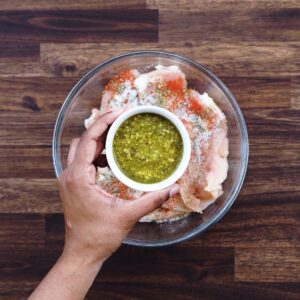
Pan Frying Chicken Breast
- Heat a small amount of olive oil in a skillet over medium heat. Once hot, add the marinated chicken breast, making sure not to overcrowd the pan so each piece can cook evenly.
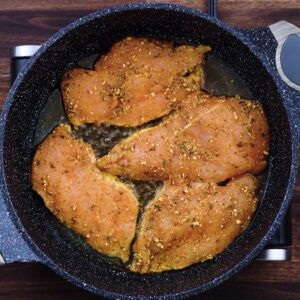
- Fry the chicken for about 5 to 7 minutes on each side, or until it's golden and cooked through. Use a meat thermometer to check that the thickest part of the breast has reached an internal temperature of 165°F, ensuring it's safely cooked.
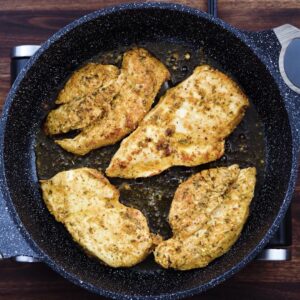
- After the chicken is fully cooked, remove it from the skillet, let it rest for a few minutes to redistribute the juices, then slice it into strips or bite-sized pieces. Set these aside to add to your pasta dish later.
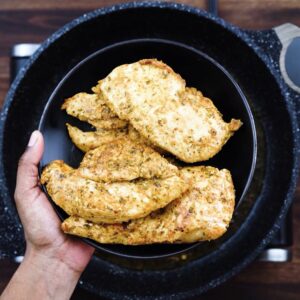
Preparing Pesto Chicken Pasta
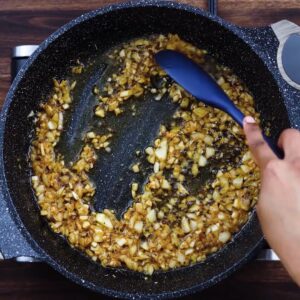
- After removing the cooked chicken, add a tablespoon of butter to the same pan. Sauté the onion and garlic until they become aromatic and start to soften, which will help build a flavorful base for the pasta.
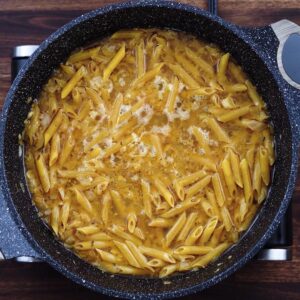
- Add the pasta and chicken broth to the pan. Stir well to combine the flavors. Allow the pasta to simmer gently, absorbing the chicken broth fully for a richer taste.
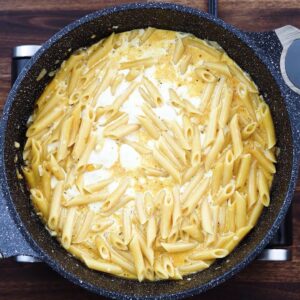
- Pour in the heavy cream and mix thoroughly. Continue cooking the pasta, stirring occasionally to prevent sticking. This ensures the pasta cooks evenly and becomes perfectly tender.
- Once the pasta is tender, add black pepper, chili flakes, and Parmesan cheese. Stir until the cheese melts and evenly coats the pasta, adding a creamy texture and rich flavor.
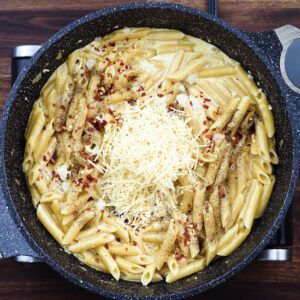
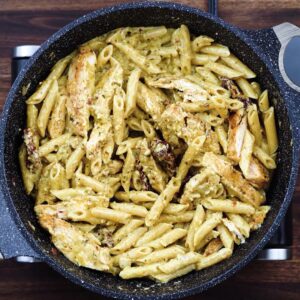
- Add the pesto sauce, the cooked and sliced chicken breast, and sun-dried tomatoes (chopped for easier eating if preferred). Mix well to ensure everything is beautifully integrated and coated with pesto.
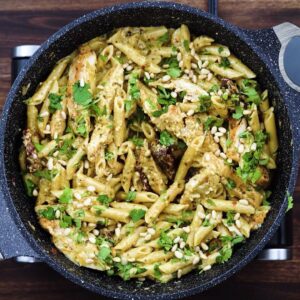
- Finish the dish by garnishing with fresh coriander leaves and toasted pine nuts for a crunchy, aromatic topping. Remove from heat and serve immediately for the best flavor and texture.
Serving
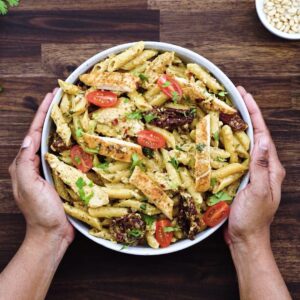
- Enjoy our creamy Pesto Chicken Pasta topped with sliced cherry tomatoes. Pair it with crusty bread, roasted veggies, or sautéed sides for a complete meal. For more pairing ideas, see our serving suggestions below.
Notes
To make your Chicken Pesto Pasta truly stand out, follow these top tips:
- Thinly Slice the Chicken Breast: Cutting the chicken into thin slices helps it cook faster and more evenly. This technique ensures each piece is tender and juicy, enhancing the overall texture of your dish.
- Season the Chicken Generously: Elevate the flavor of your chicken by seasoning it well with garlic powder, Italian seasoning, paprika, and a dash of salt. This combination infuses the meat with robust flavors that complement the pesto perfectly.
- Marinate the Chicken: If possible, let the chicken marinate in the pesto sauce and your chosen seasonings for at least 15 minutes. Marinating can significantly deepen the flavors, making each bite more vibrant and tasty.
- Check with a Meat Thermometer: Use a meat thermometer to ensure the chicken is cooked safely and perfectly. The internal temperature should reach 165°F (74°C) as per FDA guidelines. This is crucial for both safety and quality.
- Cook Pasta Al Dente: Boil the pasta until it is al dente, which means it should still have a slight bite to it. This prevents the pasta from becoming too soft and mushy when it's mixed with the sauce, preserving its texture in the final dish.
- Stir the Pasta Occasionally: During cooking, stir the pasta occasionally to prevent it from sticking together and to ensure it cooks evenly. This simple action can make a big difference in the texture of your pasta.
- Adjust Sauce Consistency: Customize the sauce to your liking by adjusting the creaminess. Add more chicken broth for a lighter sauce or a bit more heavy cream for a richer, creamier texture. This flexibility allows you to tailor the dish to your personal taste and desired consistency.
Nutrition
Serving: 1serving | Calories: 807kcal | Carbohydrates: 22g | Protein: 60g | Fat: 53g | Saturated Fat: 22g | Polyunsaturated Fat: 3g | Monounsaturated Fat: 14g | Trans Fat: 0.1g | Cholesterol: 233mg | Sodium: 1236mg | Potassium: 1082mg | Fiber: 2g | Sugar: 5g | Vitamin A: 1898IU | Vitamin C: 7mg | Calcium: 271mg | Iron: 2mg
Visit the Recipe
Want to view the full post? Simply scan the QR code with your camera and tap the link.
