
Prawn Biryani (Shrimp Biryani)
Prawn or Shrimp Biryani is a flavorful and aromatic one-pot meal from South India. It features fresh prawns mixed with basmati rice, rich Chettinad spices, and aromatic herbs. This dish stands well on its own but also pairs beautifully with South Indian chicken curries to enhance the flavors. In South India, it's commonly referred to as Eral Biryani.
Ingredients
- 1.15 lb Prawn cleaned & deveined
- 1½ cup Basmati Rice soaked for 30 minutes
- 2 Onion thinly sliced
- 2 Tomato chopped
- 2 Bay Leaves
- 1 Star Anise
- 3 Cinnamon Stick small
- 3 Cloves
- 1 Javitri
- 3 Cardamom
- 1 Kalpasi
- 3 Green Chili
- 2 tsp Ginger Garlic paste
- ½ tsp Turmeric Powder
- 1 tsp Chili Powder
- 1½ tsp Coriander Powder
- 1½ tsp Biryani Masala
- Salt as needed
- ½ cup Mint Leaves
- ½ cup Coriander Leaves
- 3 cups Water
- ¼ cup Oil
Instructions
Preparing Prawn Biryani
- In a large pan, heat oil over medium heat. Add bay leaves, star anise, cinnamon stick, cloves, javitri (mace), cardamom, kalpasi (black stone flower), and a green chili. Sauté until the mixture is fragrant and the spices release their aroma.

- Next, add thinly sliced onions to the pan. Cook them until they turn soft and translucent, stirring occasionally to ensure even cooking.
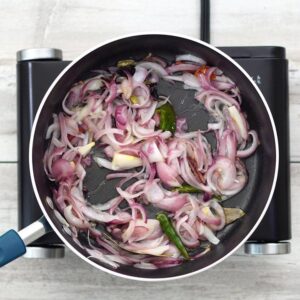
- Add ginger-garlic paste to the onions. Continue sautéing until the raw smell of the paste is gone, indicating that it's well-cooked.

- Mix in chopped tomatoes. Cook them until they are mushy and blend smoothly into the mixture, creating a thick sauce.

- Sprinkle in turmeric powder, chili powder, coriander powder, biryani masala, and a pinch of salt. Stir thoroughly to ensure all ingredients are evenly coated with the spices.

- Stir in half of the fresh mint and coriander leaves, infusing the dish with freshness and vibrant color.
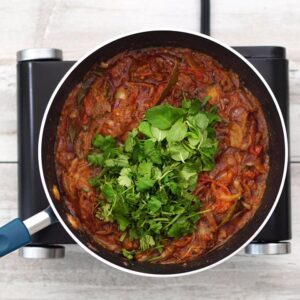
- Add cleaned and deveined prawns to the pan. Cook for about 10 to 12 minutes, or until the prawns turn pink and are tender, stirring gently to ensure they cook evenly without breaking.
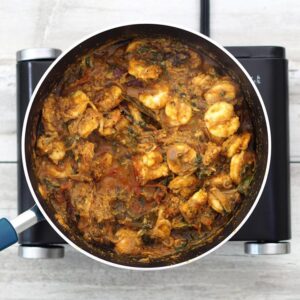
- Add basmati rice and water to the pan. Mix gently to combine without breaking the rice grains. Allow the rice to cook until it's approximately 70% done, which is typically when the grains are slightly tender but still have a bite.

- Sprinkle the remaining mint and coriander leaves over the rice. Reduce the heat to medium-low to allow all flavors to blend under gentle heat.

- Cover the pan with a lid and let the biryani cook for about 15 minutes. This slow cooking process allows the flavors to infuse deeply.

- Turn off the heat and let the biryani rest, still covered, for an additional 5 minutes. This resting time helps the flavors to settle and intensify.

- Open the lid, gently fluff the rice with a fork to separate the grains, and serve your aromatic prawn biryani hot.
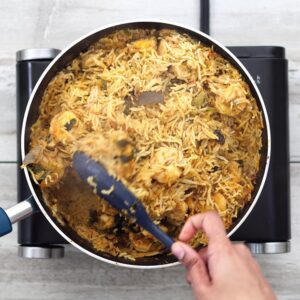
Serving
- Enjoy the Prawn Biryani with complementary sides such as spicy brinjal gravy, dalcha, raita, or a non-veg curry for a complete and flavorful meal.

Notes
Here are some of my tips to make the perfect Prawn Biryani in your own kitchen:
- Prawn Selection: Always go for fresh prawns to make sure your biryani is juicy, soft, and full of flavor. Look for ones with a firm texture and a mild, sea-sweet smell. If fresh isn’t available, high-quality frozen prawns work too. Just thaw them properly in the fridge overnight.
- Rice Selection: Basmati rice is perfect with its long grains and delicate flavor. But if you’re in the mood for something different, try Seeraga Samba rice. It's a favorite in Tamil Nadu for its unique aroma and how well it soaks up flavors.
- Rice Soaking: Don’t skip soaking the basmati rice. Give it at least 30 minutes to soak so the grains can expand fully and cook evenly. This step is key for getting that fluffy, separate-grain texture.
- Adjusting Sweetness: Prawns naturally add a bit of sweetness to the dish. If you prefer your biryani less sweet, just up the chili powder or add a few green chilies to balance it out. This helps keep the flavors nicely balanced between sweet and spicy.
- Fat Options: Using ghee instead of oil can really boost the richness and aroma of your biryani. For an even more indulgent flavor, use both ghee and oil. Ghee adds a buttery depth, while oil helps the spices cook and blend well.
- Add-Ins: Add a touch of luxury to your biryani with fried cashews and raisins for a hint of sweetness. Add these in while frying the onions for a rich, nutty flavor that complements the spices perfectly.
- Efficient Cooking: If you’re short on time, a pressure cooker or an instant pot can save the day and still lock in all those amazing flavors. Or, go for the traditional South Indian one-pot method, especially the Chettinad style, for a deeply aromatic and authentic result. Each method has its perks, so pick what suits you best.
- Resting Time: Let the biryani rest for at least 10 minutes after cooking before you dig in. This resting time lets the flavors meld together and the rice absorb all the aromatic goodness, making the dish even more cohesive and flavorful.
- Serving Temperature: Serve the biryani warm, not piping hot. Letting it cool a bit helps intensify the flavors and makes for a more enjoyable eating experience. Pair it with some cooling raita or a side salad to balance out the spices.
Nutrition
Serving: 1serving | Calories: 553kcal | Carbohydrates: 70g | Protein: 33g | Fat: 16g | Saturated Fat: 1g | Polyunsaturated Fat: 4g | Monounsaturated Fat: 9g | Trans Fat: 0.1g | Cholesterol: 210mg | Sodium: 298mg | Potassium: 752mg | Fiber: 7g | Sugar: 5g | Vitamin A: 1047IU | Vitamin C: 20mg | Calcium: 184mg | Iron: 3mg
Visit the Recipe
Want to view the full post? Simply scan the QR code with your camera and tap the link.
