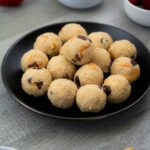
Rava Laddu (Ladoo)
Rava Laddu, also known as Rava Ladoo or Suji Laddu, is a delightful Indian sweet that's wonderfully easy to prepare. This popular treat is a favorite during festive occasions like Diwali, Holi, and Pongal. With its quick and straightforward preparation, it's also the perfect snack for any day.
Ingredients
- 1 cup Rava
- ¼ cup Ghee
- ¼ cup Coconut dessicated
- ¼ cup Milk
- ¼ cup Cashew Nuts
- 3 tsp Raisins
- ¼ cup Water
- 1 cup Sugar
- ½ tsp Cardamom Powder
Instructions
Roasting the Rava and Nuts
- Start by heating ghee in a pan over medium heat. Add cashew nuts and raisins, and sauté them until the raisins puff up and the nuts turn golden. Once done, remove them from the pan and set aside for later.

- In the same pan with the remaining ghee, add the rava. Roast it until it begins to emit a fragrant aroma, which indicates it's perfectly roasted.
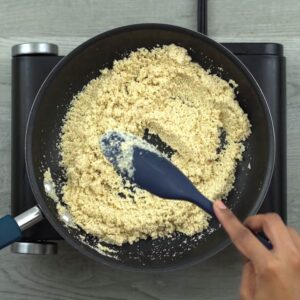
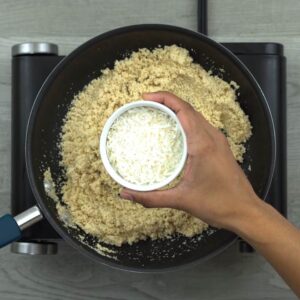
- Mix in the desiccated coconut with the roasted rava, making sure it's well incorporated. Set this mixture aside for later use.
Making Sugar Syrup
- Place a pan on medium heat and add both sugar and water. Stir gently to help the sugar dissolve completely into the water.
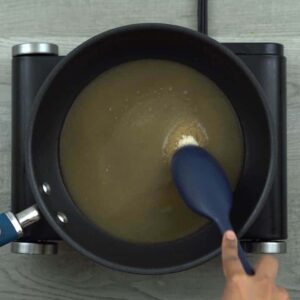
- Allow the sugar-water mixture to boil for about 5 minutes, or until it reaches a 1-string consistency, meaning that when a small amount of syrup is dropped between your thumb and index finger and stretched apart, it forms a single thread. Once this consistency is achieved, turn off the heat.
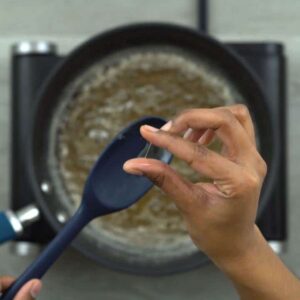
Making Rava or Suji Laddu
- Begin by adding cardamom powder and the previously fried nuts to the sugar syrup. Stir them together thoroughly to blend the flavors evenly.
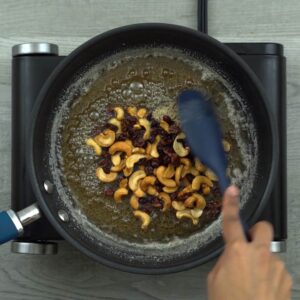
- Gradually add the roasted rava-coconut mixture to the syrup, stirring continuously to ensure the syrup is fully absorbed by the rava.
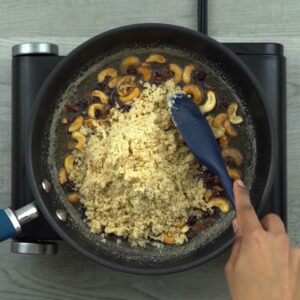
- Pour in the milk and continue mixing until everything is well incorporated and the mixture achieves a uniform texture.
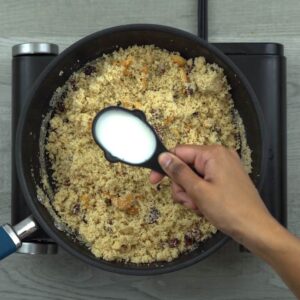
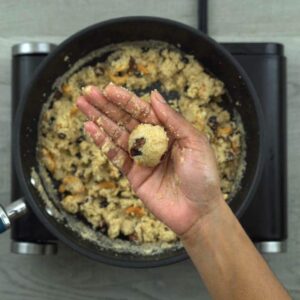
- Once the mixture is ready, take small portions and gently shape them into circular balls to form your rava coconut ladoos. Now, they are ready to be savored and enjoyed.
Serving
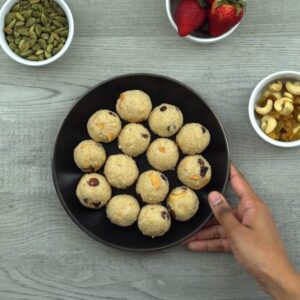
- Enjoy these delightful Rava Coconut Ladoos on special occasions or simply as a sweet treat on any regular day!
Notes
Here are my tips for making delicious Rava/Suji Laddu:
- Roasting the Rava: The key to perfect laddus lies in properly roasting the rava. Do this evenly over medium heat until it emits a fragrant aroma. Make sure not to burn it, as uneven roasting can result in a raw taste that might upset the stomach.
- Sugar Syrup Consistency: The texture of your laddus depends heavily on the consistency of the sugar syrup. For ideal results, turn off the heat when it reaches a 1-string consistency. If you prefer, you can also use powdered sugar mixed with the roasted rava, binding them together with ghee and milk for a different texture.
- Using Jaggery: If you prefer to use jaggery instead of sugar, simply melt the jaggery and mix it thoroughly into the rava. This method doesn’t require you to achieve a string consistency like you would with sugar syrup, making it an easy and effective substitute.
- Shaping Issues: If your rava laddus aren't holding their shape, the mixture might be too dry. For laddus made with sugar syrup, consider adding up to 2 teaspoons of milk to help bind them. If you're using powdered sugar, adding an extra 3 teaspoons of warm ghee can also improve the mixture's moldability.
- Vegan Variations: For a vegan version of rava laddu, substitute ghee with coconut oil and milk with almond milk. Keep in mind that coconut oil can add a distinct flavor, which may not be to everyone's liking. If you're concerned about the taste, opt for a flavorless coconut oil.
Nutrition
Serving: 1serving | Calories: 144kcal | Carbohydrates: 17g | Protein: 4g | Fat: 7g | Saturated Fat: 3g | Polyunsaturated Fat: 0.3g | Monounsaturated Fat: 2g | Cholesterol: 17mg | Sodium: 135mg | Potassium: 37mg | Fiber: 0.3g | Sugar: 15g | Vitamin A: 7IU | Vitamin C: 0.1mg | Calcium: 7mg | Iron: 0.2mg
Visit the Recipe
Want to view the full post? Simply scan the QR code with your camera and tap the link.
