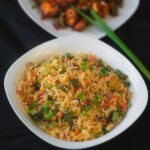
Vegetable Fried Rice
Vegetable Fried Rice is an easy and delicious Chinese dish that works well for lunch, dinner, or even as a crowd-pleaser at parties. The combination of rich flavors and simple preparation makes it perfect for any occasion. Each bite is packed with flavor, making it a satisfying choice every time.
Ingredients
- 3 cup Basmati Rice cooked, or other rice of your choice
- ¼ cup Green beans chopped
- ¼ cup Carrots chopped
- ¼ cup Green bell pepper chopped
- 8 pod Garlic peeled and minced
- 1 tsp Soy sauce
- 1 tsp Chili paste or sub with szechuan sauce
- ½ tsp Ketchup
- ½ tsp Salt adjust as needed
- 1 tsp Pepper powder
- 2 tbsp Olive oil
- Spring onions to garnish
Instructions
Making Vegetable Fried Rice
- Start by heating some oil in a pan over medium heat. Let the oil warm up until it starts shimmering but not smoking. This way, the garlic sautés evenly.
- Add the minced garlic to the pan and sauté for about 4 to 5 seconds, just until fragrant. Be careful not to let the garlic brown too much, as it can become bitter.
- Add the green beans and carrots with a pinch of salt. Stir-fry on high heat for about a minute. Cooking on high heat helps the veggies stay crisp while getting a slight char, adding more flavor.
- Stir in the bell pepper and cook for another minute. The bell pepper adds sweetness and color, so keep stirring to blend everything well.
- Pour in the soy sauce, chili paste, and ketchup, mixing it all together. Adjust the sauces to your taste, adding more chili paste for extra spice or less for a milder flavor. Ketchup provides a nice balance of sweetness and tang.
- Gently fold the cooked rice into the vegetable mixture, making sure the rice absorbs the flavors and mixes well with the veggies. Using day-old rice is ideal, as it's less likely to become mushy when stir-fried.
- Sprinkle a bit of pepper powder and chopped spring onions on top. Stir everything one last time to blend the flavors, then remove from heat. Your delicious Vegetable Fried Rice is ready to be enjoyed.
Serving
- Serve the Vegetable Fried Rice warm with your favorite hot sauce, or pair it with a spicy side dish for an extra kick of flavor. For more pairing ideas, check out our Serving Suggestions section below.
Notes
Here are some essential tips for making perfect Vegetable Fried Rice:
- Rice Selection: Day-old Basmati, or plain white rice works best for fried rice because these varieties stay firm and don’t clump together during stir-frying. Day-old rice is drier, which prevents the dish from becoming mushy. Using pre-cooked or leftover rice not only saves time but also helps with better grain separation.
- Fresh Rice: If you’re using freshly cooked rice, allow it to rest at room temperature for 2-3 hours or refrigerate it for about 30 minutes. This helps reduce moisture and prevents the rice from becoming soggy when you stir-fry it.
- Fresh Ingredients: Always use fresh, high-quality vegetables for the best flavor and appearance. Fresh veggies keep their vibrant colors and crunch during stir-frying, which makes the dish not only tastier but also more visually appealing.
- Prep Everything in Advance: Stir-frying happens quickly, so it’s important to have all your ingredients chopped and ready before you start cooking. This way, nothing overcooks while you’re preparing the next ingredient, and the cooking process flows smoothly.
- Cook on High Heat: Stir-frying on high heat ensures the vegetables remain crisp, and it helps the rice get a slight char that adds a subtle smoky flavor. Keep stirring constantly to avoid burning and to allow the ingredients to cook evenly without sticking to the pan.
- Be Careful with Salt: Soy sauce usually contains salt, so be cautious with adding extra salt. Opting for low-sodium soy sauce can give you more control over the salt level in your dish. Always taste the rice before deciding if it needs additional seasoning.
- Vegetable Options: Feel free to mix and match vegetables to suit your taste. You can add broccoli, mushrooms, zucchini, or snow peas for a more veggie-packed meal. If you’re using cabbage, it’s best to sauté it at the end after adding the other vegetables. Since cabbage has a higher water content, it can become soggy if added too early.
- Use a Wok: If you have a wok, it’s the perfect tool for stir-frying. Its shape allows for even heat distribution, and it makes tossing the ingredients easier at high temperatures. If you don’t have a wok, a large frying pan can work, but you may need to cook in smaller batches to avoid overcrowding the pan.
- Flavor Boost: For an extra layer of flavor, add a dash of sesame oil or a squeeze of lime juice just before serving. Sesame oil adds a rich, nutty taste, while lime juice gives a bright, tangy finish that balances the savory flavors.
Nutrition
Serving: 1serving | Calories: 583kcal | Carbohydrates: 114g | Protein: 11g | Fat: 8g | Saturated Fat: 1g | Polyunsaturated Fat: 1g | Monounsaturated Fat: 5g | Sodium: 394mg | Potassium: 244mg | Fiber: 3g | Sugar: 1g | Vitamin A: 1632IU | Vitamin C: 10mg | Calcium: 50mg | Iron: 1mg
Visit the Recipe
Want to view the full post? Simply scan the QR code with your camera and tap the link.
