
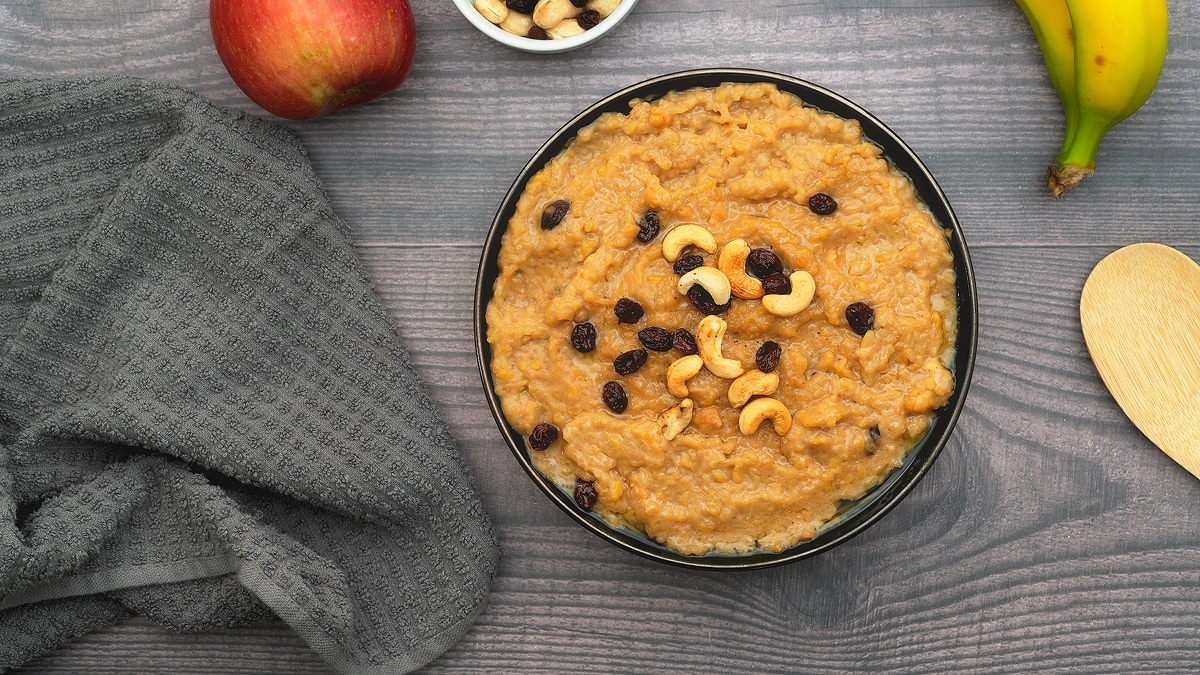
Sakkarai Pongal, a celebrated South Indian sweet, is a highlight of the Pongal and Sankranthi festivals. This delightful dish is known for its rich, festive flavor, making it a favorite during these occasions. It has a savory counterpart, Ven Pongal, showcasing the culinary diversity of the festival. Both versions hold a special place in the celebratory feasts.
What You’ll Find On This Page
Primarily celebrated in Tamil Nadu as Thai Pongal, this four-day harvest festival honors the Sun and nature. Each day holds unique importance: Bhogi Pongal symbolizes new beginnings, Surya Pongal involves sweet Pongal offerings, Mattu Pongal celebrates cattle, and Kanum Pongal strengthens community and family ties.
The festival, known as Pongala in Kerala and Sankranti in Karnataka and Andhra Pradesh, brings together various communities in a shared spirit of thankfulness and joy.
Explore Delectable Sweet and Breakfast Dishes:

Sakkarai Pongal (Sweet Pongal)
Ingredients
- 1 cup Rice, sona masoori, washed
- ¾ cup Moong Dal, washed and dried
- 1 cup Jaggery Powder
- ¼ cup Mixed Cashew and Raisin
- 2 Cloves
- ¼ cup Ghee
- 1 tsp Cardamom Powder
- 4 cup Water
- 1 cup Milk
Instructions
Roasting Moong Dal
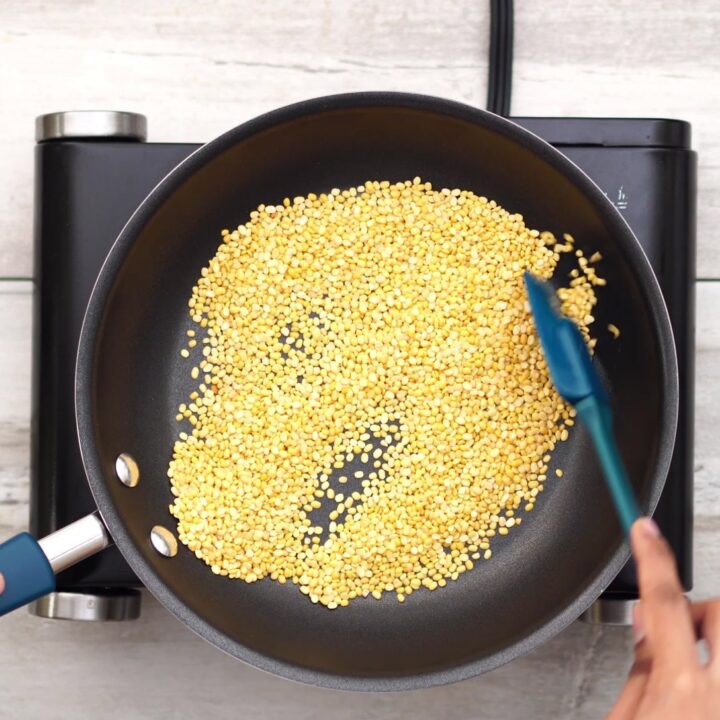
- In a medium-heated pan, gently roast washed and dried moong dal until aromatic. Set aside for later use, infusing your dish with a nutty essence.

Making Sakkarai Pongal
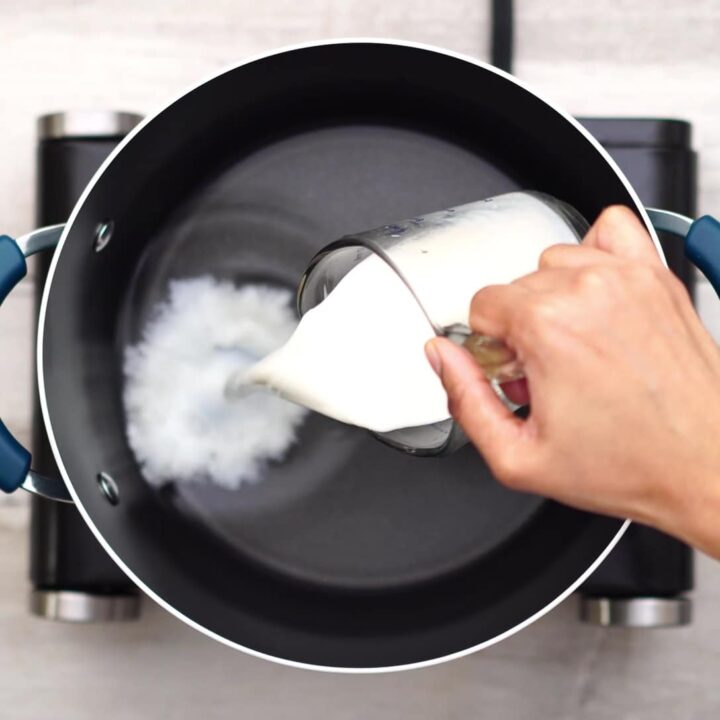
- Place a pan or pot on medium heat and pour in water mixed with half of the milk. Allow this mixture to gently heat up, stirring occasionally to prevent a skin from forming on the milk.
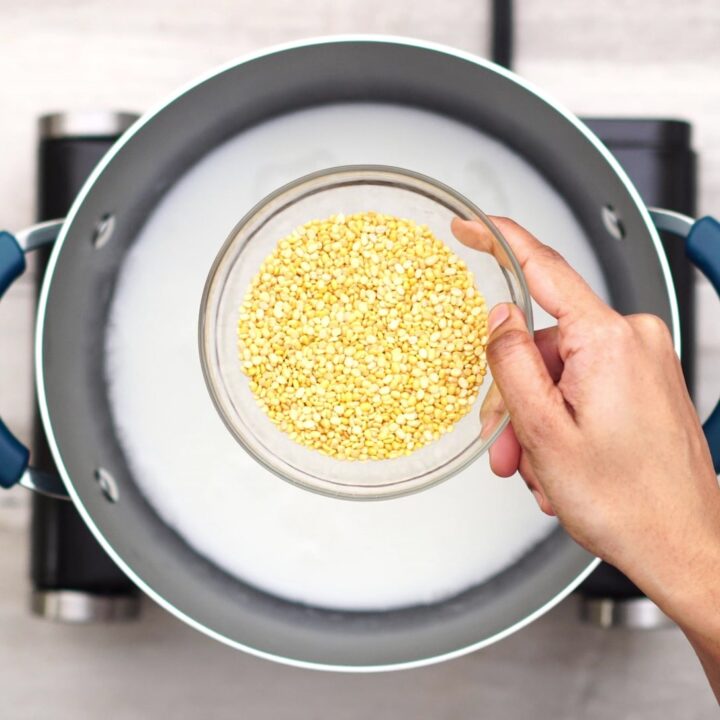
- Once the liquid is warm, add your aromatic, roasted moong dal and thoroughly washed rice. This blend of grains will form the heart of your Pongal.
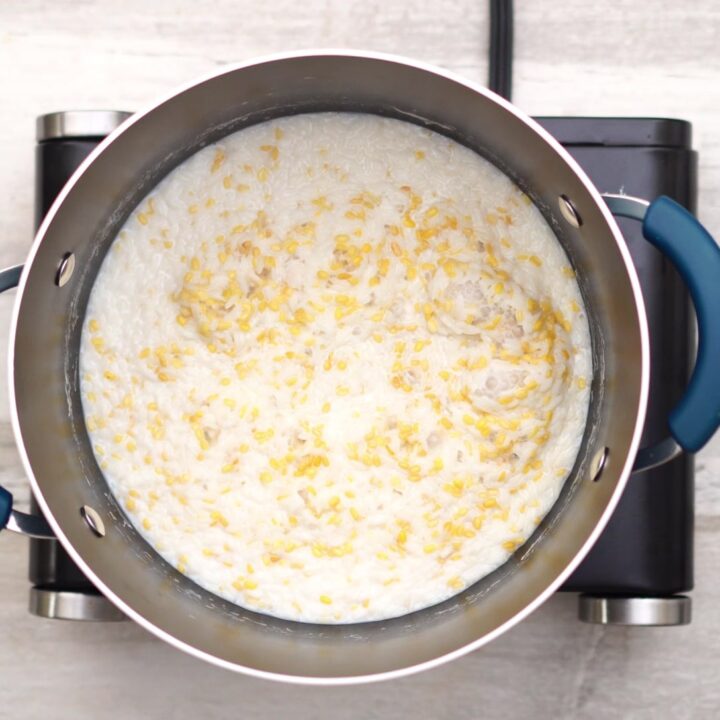
- Let the rice and dal cook until they're about 90% done. Keep a vigilant eye, stirring intermittently, to ensure the mixture cooks evenly without sticking to the bottom.
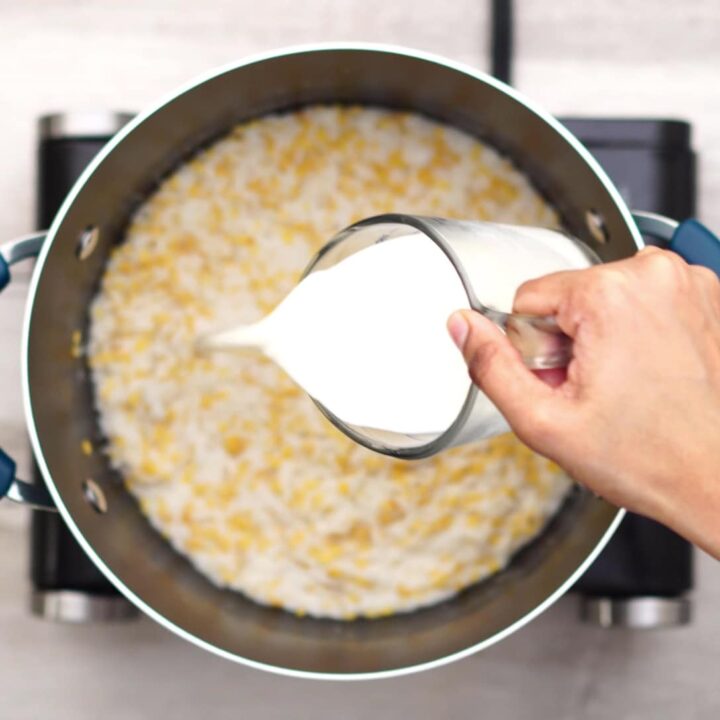
- Next, introduce the remaining half cup of milk. This addition aids in breaking down the rice and dal further, creating that classic mushy, creamy texture characteristic of Sakkarai Pongal.
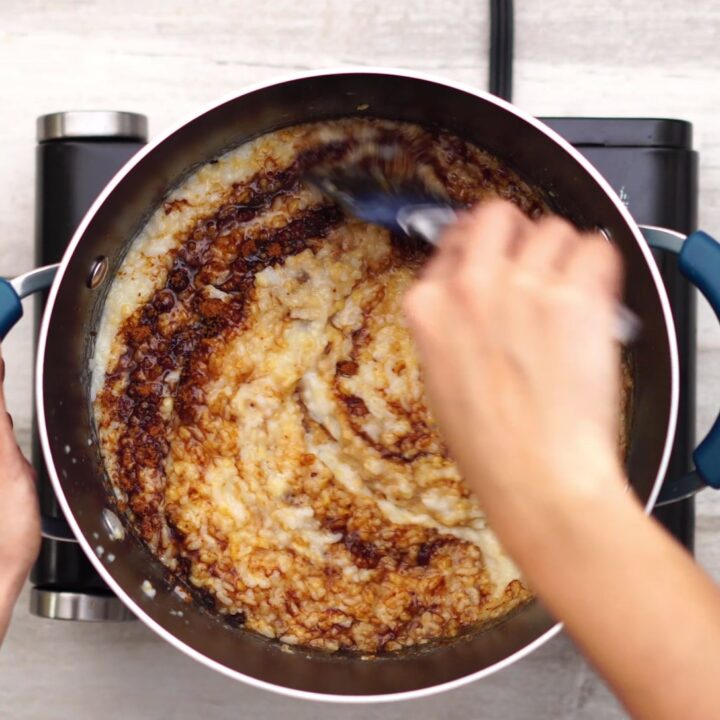
- Time to sweeten the dish with Jaggery powder. If your jaggery is unrefined, consider melting it with a little water in a separate pan, then straining it to remove any impurities before adding to the rice and dal.
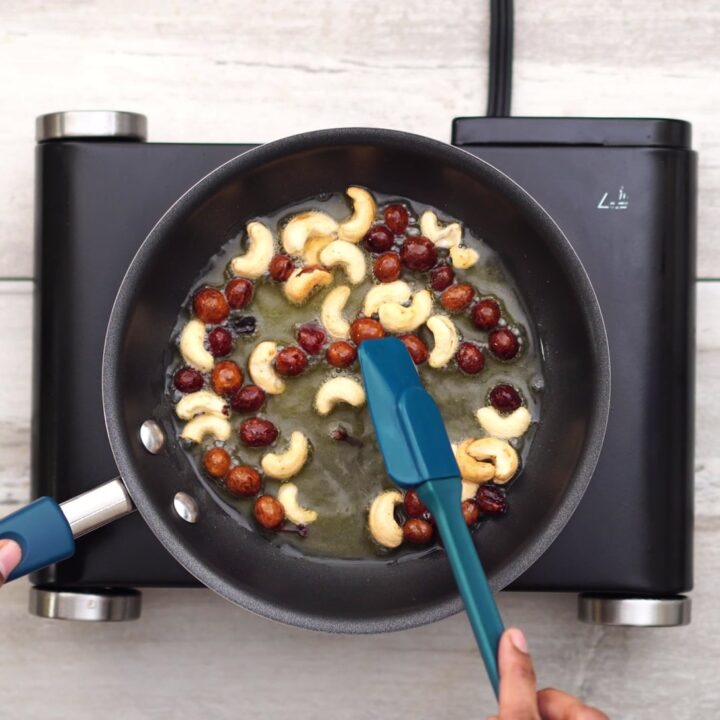
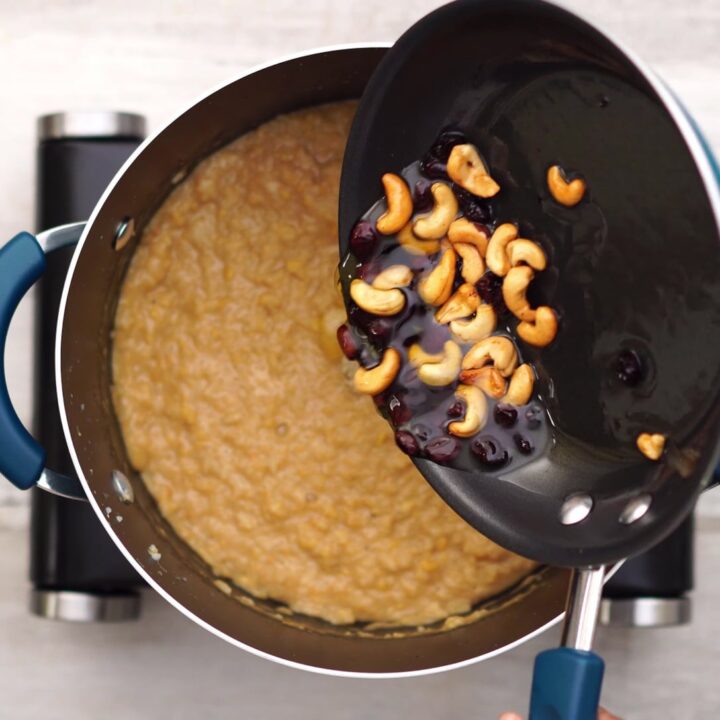
- In a different pan, warm some ghee and sauté cashews, raisins, and cloves until the cashews are beautifully golden. This not only adds a nutty crunch but also infuses the ghee with the spices' aromatics.
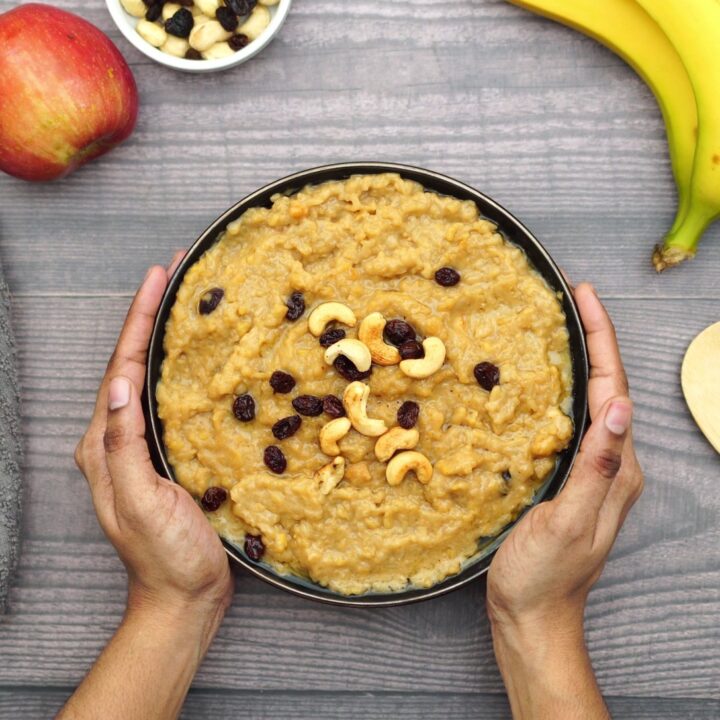
- Combine this rich, ghee-nut mixture and a sprinkle of ground cardamom into the rice and dal. Mix well, ensuring every grain is coated with flavor. Your Sweet Pongal is now ready to be enjoyed.
Serving
- Enjoy your Sakkarai Pongal warm, perfect as a standalone treat or paired with savory sides for a delightful contrast. For more pairing ideas, refer to the serving suggestions section.
Recipe Video
Chef's Notes and Tips
Preparation Essentials:
- Select High-Starch Raw Rice: Opt for raw rice varieties known for their high starch content. This choice is crucial as it significantly contributes to achieving the classic, mushy consistency that is characteristic of Pongal.
- Pre-Roasting Moong Dal: Lightly roasting the moong dal before boiling can enhance the dish's flavor. It adds a nutty aroma and prevents the dal from getting too mushy, providing a subtle textural contrast to the rice.
- Perfect Rice-Water Ratio: Maintain a rice-to-water ratio of 1:4. This specific proportion is key to getting the right gooey texture in your Pongal. For an enhanced taste, consider adding an extra part of milk, adjusting the ratio to 1:4:1. This addition of milk enriches the flavor, making the dish creamier and more luxurious.
- Consistent Heat Management: Cook the Pongal on a low to medium flame. This slow cooking process allows the flavors to develop fully without the risk of burning, leading to a well-cooked, flavorsome dish.
Flavor and Texture Enhancements:
- Frequent Stirring: While cooking Sakkarai Pongal, especially in a pot or an open vessel, ensure that you stir the rice and dal mixture frequently. This is a vital step to avoid any burning at the bottom of the vessel and to ensure even cooking. It helps in distributing the heat uniformly and allows the flavors to meld together beautifully.
- Choose Quality Darker Jaggery: For a deep, inviting color and a richer, more authentic flavor, use darker jaggery, particularly urundai vellam. This type of jaggery not only sweetens the dish but also imparts a traditional and distinct taste that sets your Pongal apart.
- Ghee Quality: Use high-quality, pure ghee for frying nuts and adding to the Pongal. The aroma and flavor of good ghee are pivotal in authentic Sakkarai Pongal, lending it a distinctive, rich taste.
- Fresh Cardamom: Crush fresh cardamom pods instead of using pre-ground cardamom. Freshly crushed cardamom seeds will impart a more vibrant and aromatic flavor to the Pongal.
- Nuts and Raisins: Add a generous amount of cashews and raisins fried in ghee. They not only add to the taste but also provide a delightful crunch and sweetness, enhancing the overall texture of the dish.
Nutrition Info
Disclaimer
We're not nutrition experts, and the nutritional information provided is an estimate. Please use it as a guide. For precise details, it's best to consult a professional. To learn more, please view our Detailed Disclaimers.
Serving Suggestions
To enhance the experience of enjoying Sakkarai Pongal, consider these serving suggestions:
- Pair with Savory Sides: Balance the sweetness of Sakkarai Pongal by pairing it with savory sides like Ven Pongal (a savory version of Pongal), Medu Vada, or Sambar. This combination offers a delightful contrast in flavors.
- Serve as a Dessert or Snack: Sakkarai Pongal can be a standalone dessert or a sweet snack. It's a versatile dish that fits well at the end of a meal or as a treat during tea time.
- Festive Serving: During festivals, serve Sakkarai Pongal in traditional earthenware or brass vessels to enhance the festive mood and add an authentic touch.
- Pair with a Hot Beverage: Complement Sakkarai Pongal with a hot beverage like masala chai, filter coffee, or a spiced herbal tea. The warmth and aroma of the beverage pair well with the sweetness of the Pongal.
Storage Suggestions
To store Sakkarai Pongal, place it in an airtight container and refrigerate. It usually remains fresh for 2 to 3 days when stored this way. When you're ready to serve it again, gently reheat the Pongal either in a microwave or on a stovetop, ensuring it regains its warm, comforting texture. It's advisable to avoid freezing Sakkarai Pongal, as this can significantly alter its texture and taste. Remember, fresh preparation is key to enjoying its authentic flavor.
Variations of Sakkarai Pongal
Sakkarai Pongal, a classic sweet dish, offers diverse variations, reflecting India's rich culinary traditions. While the traditional recipe includes jaggery, moong dal, cow's milk, nuts, and ghee, regional adaptations offer unique twists:
- Dairy-Free Version: In some regions, people omit moong dal and milk, using water instead. This variation caters to different dietary preferences and retains the dish's essential sweetness.
- Sweetener Variations: White sugar is sometimes used as an alternative to jaggery. Though it alters the traditional flavor, it still results in a delightful sweet Pongal.
- Grain Substitutions: Millets like finger millet or foxtail millet, and even whole wheat grains, are occasionally used instead of rice. This not only adds nutritional variety but also introduces different textures and flavors.
- Cooking Methods: Traditionally cooked in a pot for the Pongal festival, modern adaptations include using pressure cookers or instant pots. These methods speed up the cooking process, making it more convenient for fast-paced lifestyles.
Leave a Review