
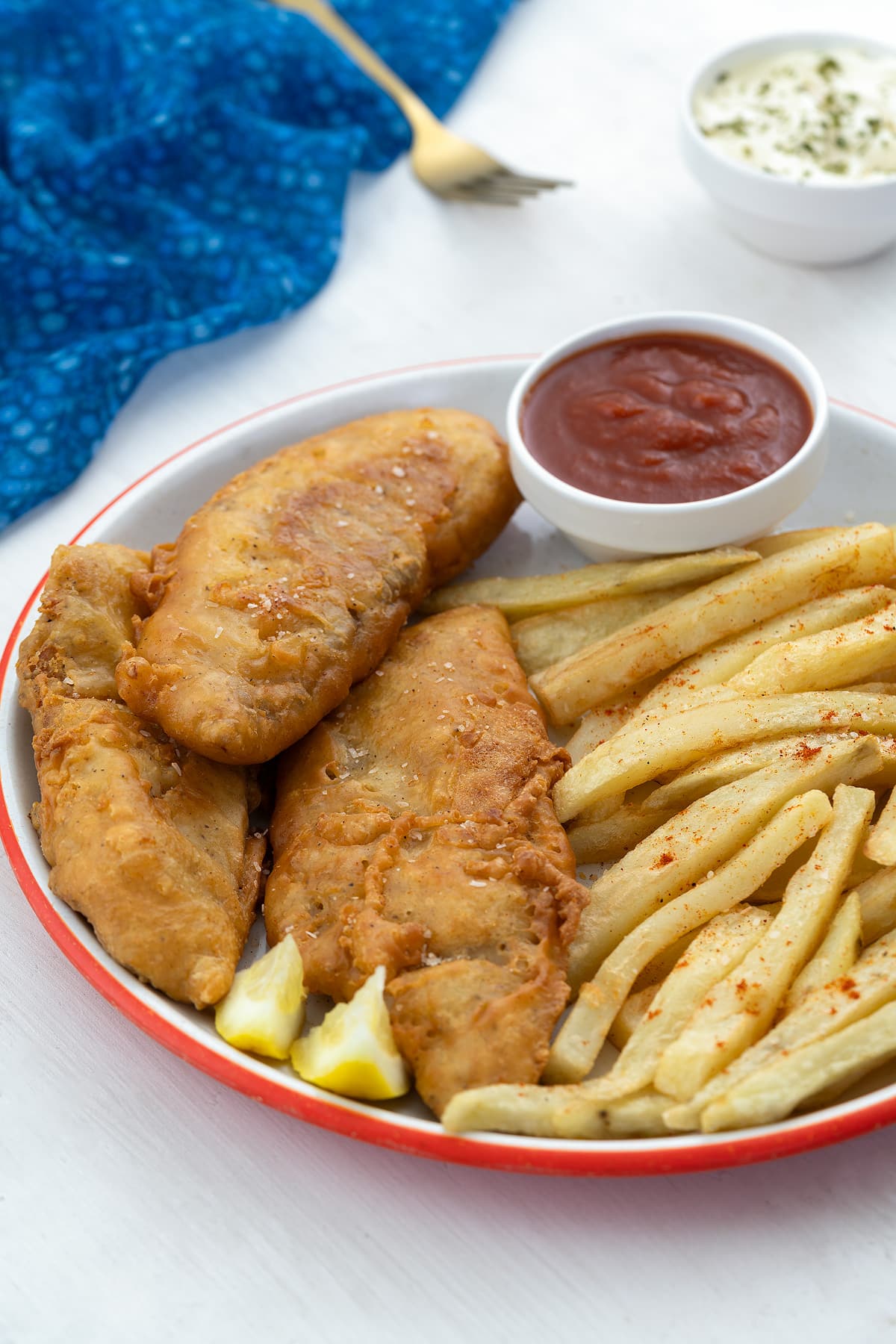
Fish and chips is a popular British dish, celebrated for its crispy, flaky texture. This meal typically involves boneless fillets of cod or haddock, dipped in beer batter and fried until golden. It's served with hearty, double-fried chips and is usually enjoyed with malt vinegar or a dipping sauce like tartar or remoulade.
What You’ll Find On This Page
Celebrated as a national dish and a popular takeaway choice in the UK, fish and chips is recognized as one of the best fish recipes and has won fans around the world. Seaside resorts, street food stalls, and local fish and chip shops, affectionately known as "chippies," all love to serve it.
While traditionally made with cod or haddock, you can also use other white fish fillets based on availability and preference. In this post, I’m excited to show you how to prepare delicious fish and chips using tilapia fillets, with a kid-friendly batter made using milk instead of beer. I've tailored the recipe to fit my family’s taste preferences, but it still delivers that authentic texture and flavor. Let’s get started!
Discover More Seafood Dishes:
Ingredients and Substitutions Overview
The ingredients you need for Fish and Chips are likely already in your kitchen—fresh fish, basic seasonings, and potatoes. Let’s take a closer look at what you’ll need below.
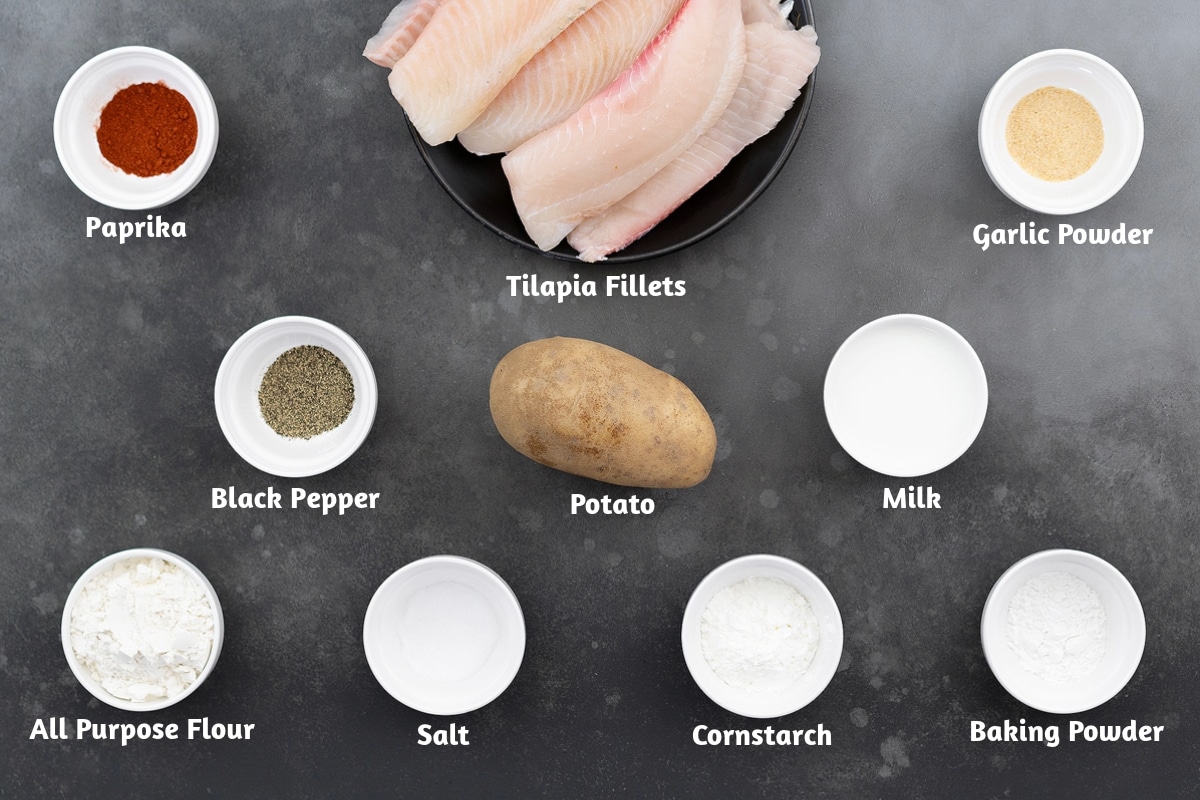
- Boneless Fish Fillets: Cod is typically chosen for classic British fish and chips due to its flaky texture and delicate flavor. I've opted for tilapia because it's readily available, but haddock, pollock, or catfish are excellent alternatives if you prefer.
- Flour: Use a mix of all-purpose flour and cornstarch for the batter to achieve a wonderfully crispy exterior when fried.
- Baking Powder: This ingredient causes the batter to puff up, ensuring the fish has a crispy, airy texture and keeps the coating light and crunchy.
- Seasonings: Opt for simple seasonings like black pepper, paprika, salt, and garlic powder to achieve a balanced flavor. You can also sprinkle some fry seasoning or seasoned salt on both the fish and chips before serving for an extra zest.
- Milk or Beer: Traditionally, beer is used to create a light, crispy batter. Considering my young children, I've used milk to make the dish more kid-friendly.
- Potatoes: Russet potatoes are ideal for chips due to their high starch content, which ensures a crispy exterior and soft interior when fried. Yukon Gold or Kennebec potatoes are great substitutes if russets are not available.
- Oil: Select any neutral-flavored oil with a high smoke point for frying, such as canola, peanut, sunflower, corn, or vegetable oil, based on what’s available.
How to Make Fish and Chips at Home?
Let's get ready to make fish and chips together! It’s a bit of a lengthy process, but I’ll guide you through every step, showing you how to cut, blanch, and double-fry potatoes for the perfect fries. Next, we'll season the fish, prepare the batter, coat the fish, and fry it until it's perfectly crispy. Each step comes with photos and a detailed video to make the cooking process straightforward and clear.
Explore More Fried Foods:
- Fish Fry
- French Fries
- Sweet Potato Fries
- Salmon Patties
- Chicken Patties
- Fried Shrimp
- Fried Chicken
- Fried Chicken Tenders
- Fried Chicken Wings
- Oven fried Chicken
- Fried Onions
- Hush Puppies
Fish and Chips
Ingredients
For Seasoning and Dredging Fish
- 1.375 lb White Fish Fillets, sliced (cod, haddock, or tilapia)
- Black Pepper Powder, to taste
- Salt, to taste
- ¼ cup All-Purpose Flour
For the Batter
- 1 cup All-Purpose Flour
- ½ cup Cornstarch
- 1 tsp Baking Powder
- ½ tsp Paprika
- ½ tsp Garlic Powder
- ½ tsp Black Pepper Powder
- 1¼ cup Milk, or Beer
- Salt, to taste
For the Chips
- 3 Russet Potatoes, washed
- Water, to blanch
For Frying
- Oil, enough to deep fry
Instructions
Preparing Potatoes for Chips
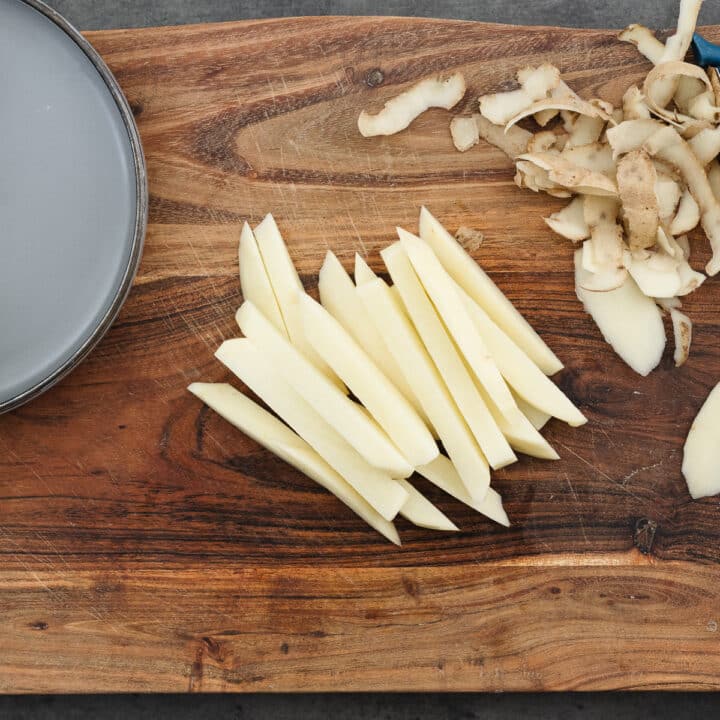
- Start by peeling the potatoes (you can also leave the skin on for extra texture). Trim the oval sides to achieve a more uniform shape for the fries. Cut the potatoes in half, then into strips about ¼ to ½ inch thick to ensure even cooking.

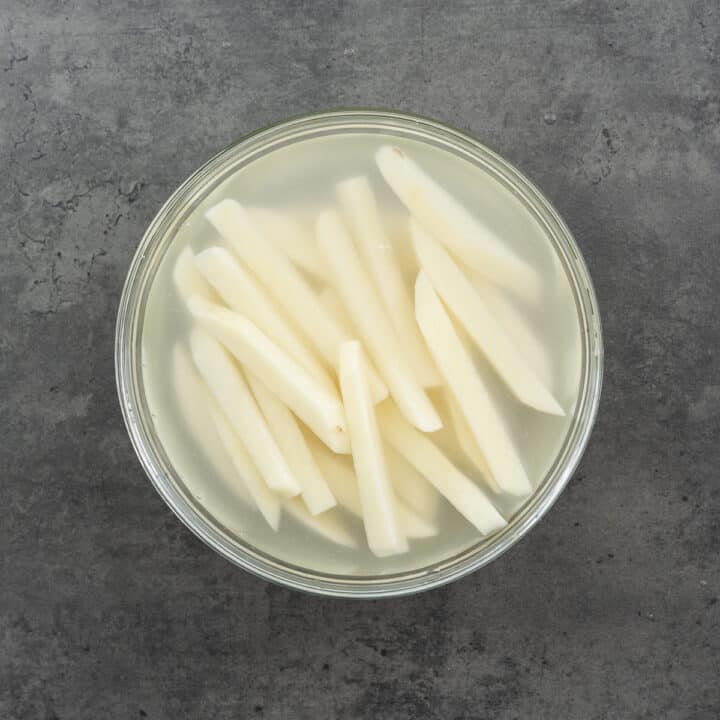
- Place the sliced potato strips in a bowl and rinse with water several times until the water runs clear. This step removes excess starch, which helps the potatoes crisp up nicely when fried.
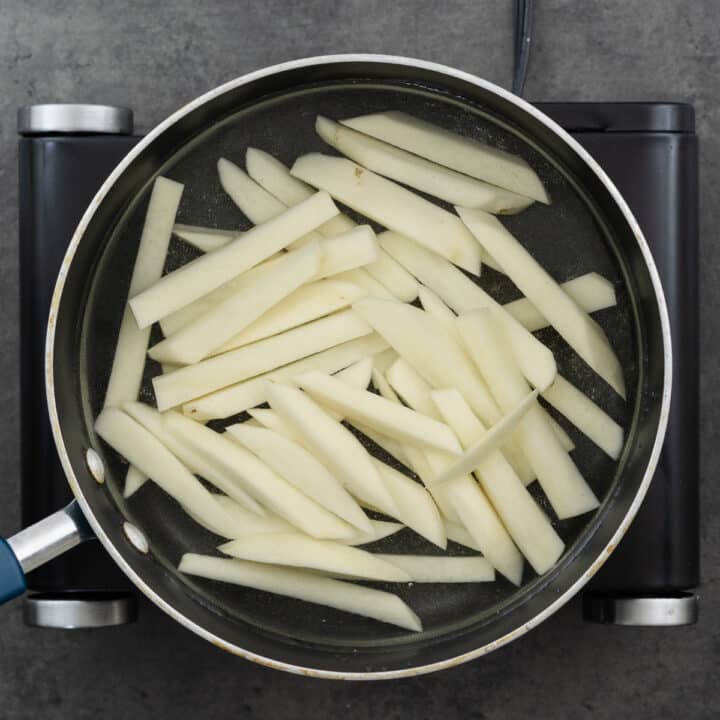
- Fill a wide-bottomed pot with enough water to cover the potato strips. Bring to a boil over medium heat and cook for 3-5 minutes. Blanching makes the potatoes slightly tender, prepping them for frying.
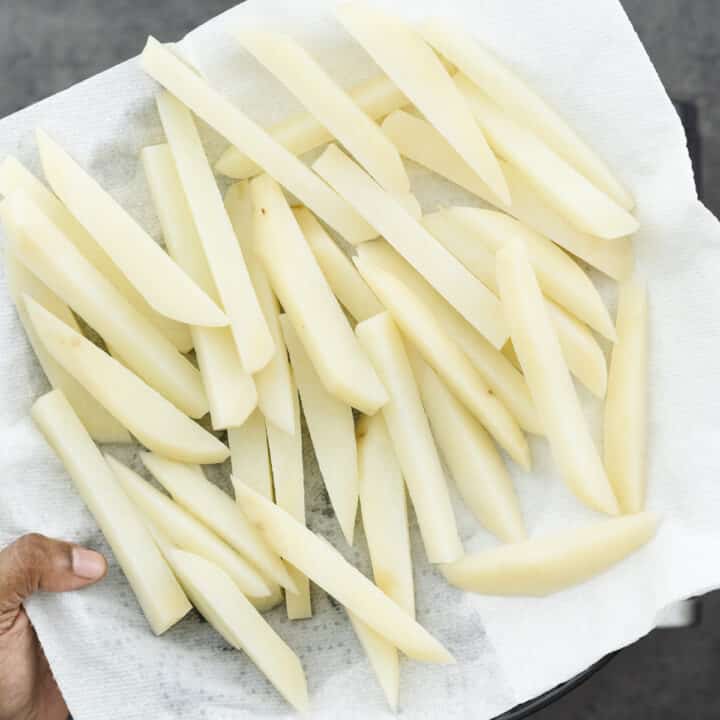
- After blanching, transfer the potato strips to a tray lined with paper towels. Pat them dry to remove any excess water and refrigerate for at least an hour. This drying step firms up the potatoes, helping them to crisp up evenly when fried. While the potatoes are chilling, you can start preparing the fish.
Preparing Fish
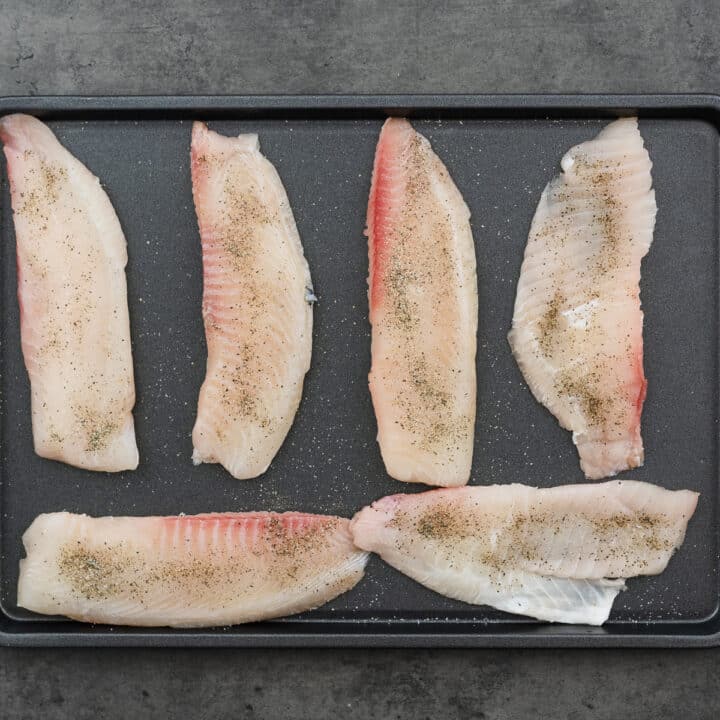
- First, place your fish fillets on a tray. Before seasoning, pat them dry with a paper towel to remove any moisture; this helps the seasoning adhere better. Season both sides of the fillets generously with black pepper and salt for a flavorful base.
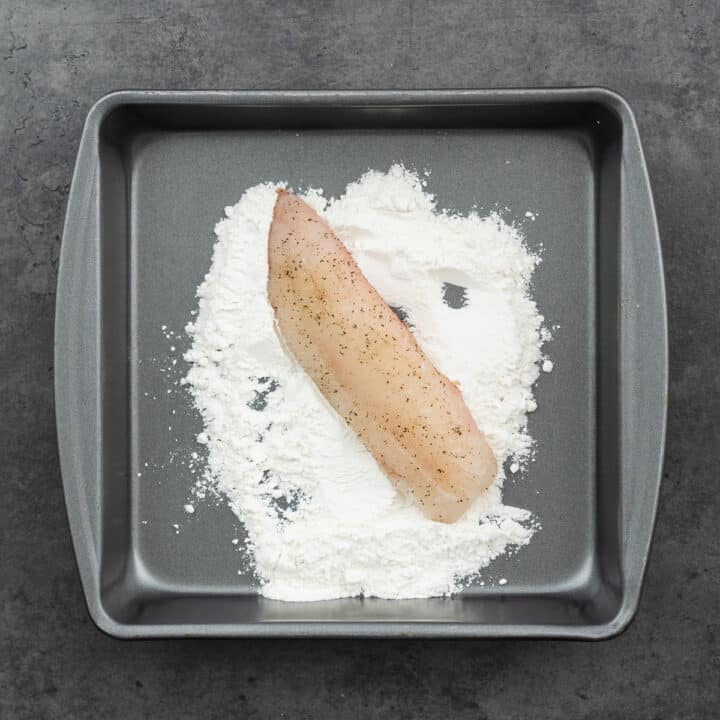
- Next, spread all-purpose flour evenly on another tray. Place the seasoned fish fillets in the flour and coat them thoroughly. This step locks in the seasoning and ensures the batter will adhere properly to the fish, preventing it from falling off during frying.
Preparing Fish Fry Batter
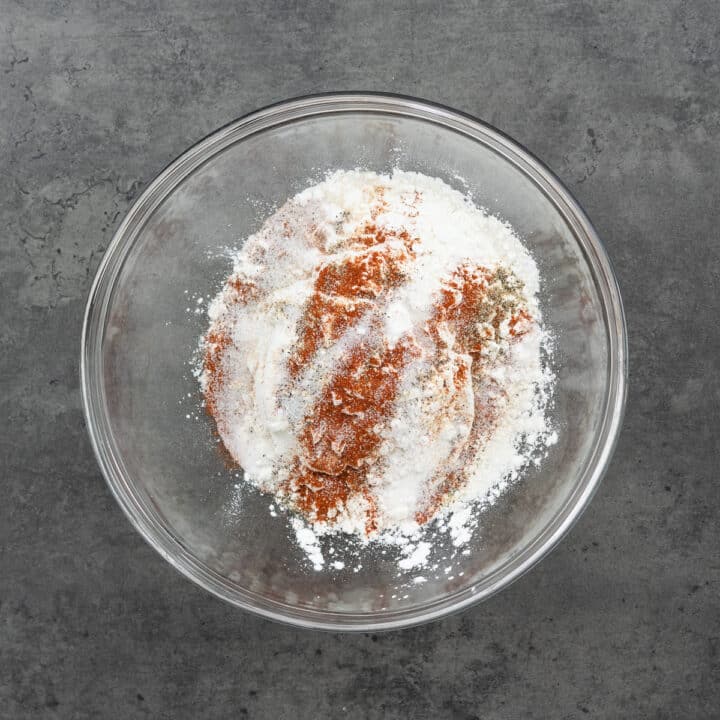
- In a bowl, combine all the batter ingredients except the milk. Use a whisk to thoroughly mix everything, helping the seasonings distribute evenly.
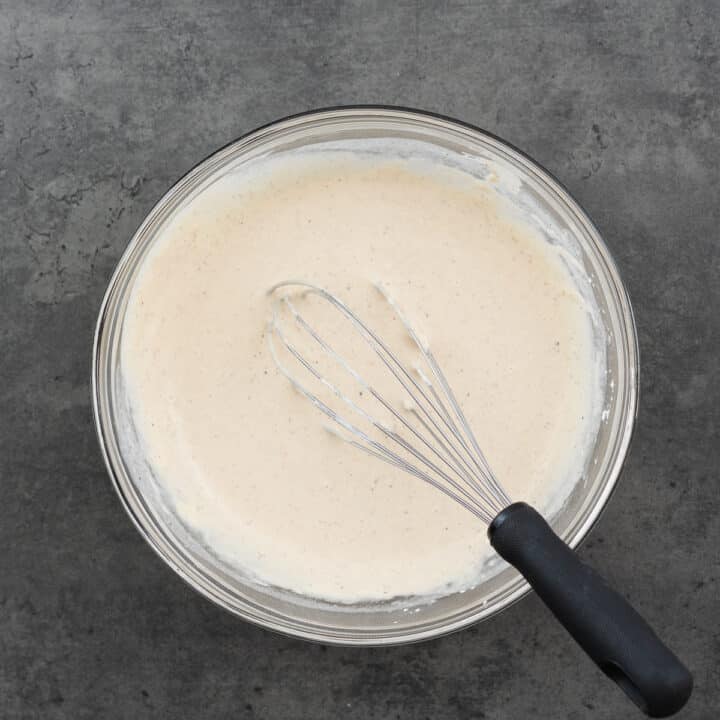
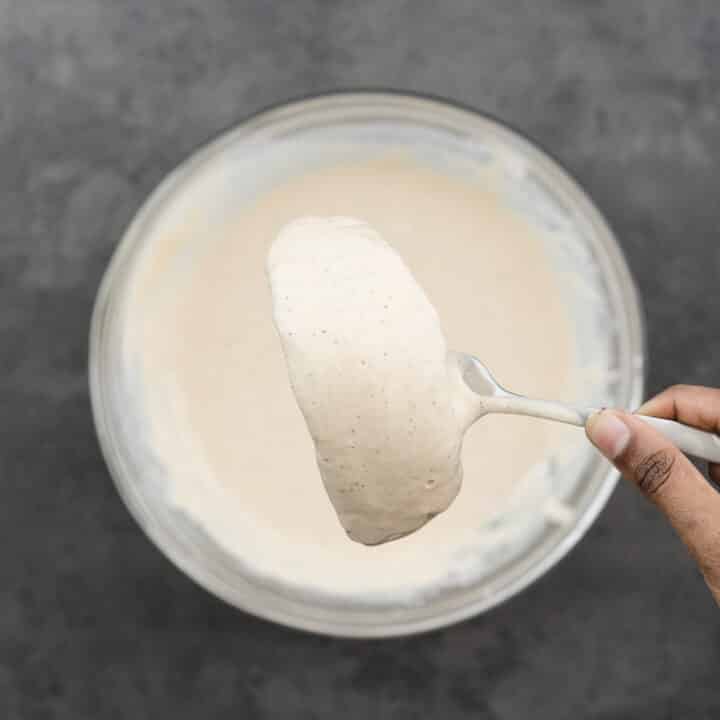
- Gradually pour in the milk while continuously whisking to form a smooth batter. Aim for a thick consistency that still flows easily. If the batter is too thick, add a little more milk to slightly thin it out, but keep it thick enough to properly coat the fish, as shown in the picture.
- Take the flour-coated fish fillets prepared earlier and dip them into the batter. Use a fork or tongs to make sure each fillet is well coated. Your fish is now ready to fry.
Frying the Fish
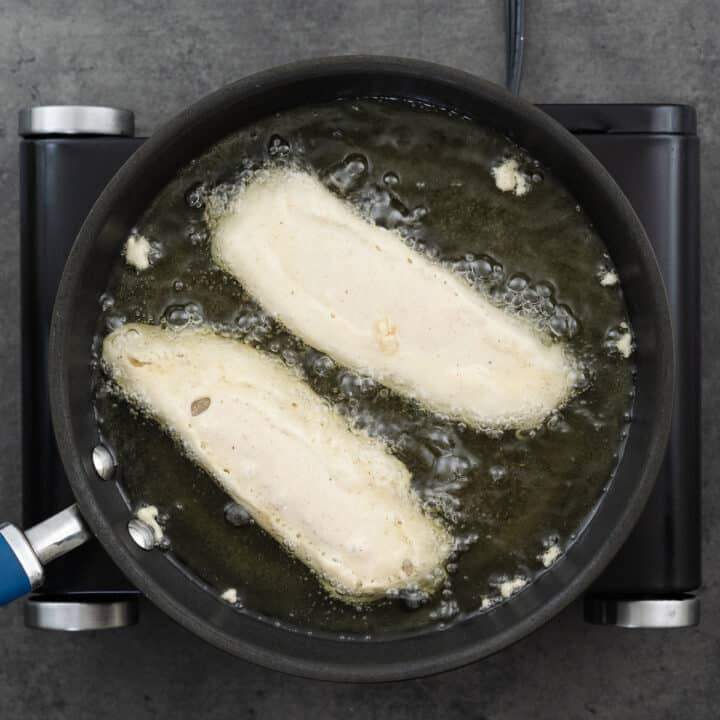
- Fill a frying pan with enough oil for deep frying and preheat it to 350°F (medium heat). Use a thermometer to check the temperature or perform a fry test with a piece of bread (as mentioned in the tips section below) to ensure the oil is ready. Once hot, carefully add the battered fish to the oil, taking care not to overcrowd the pan.
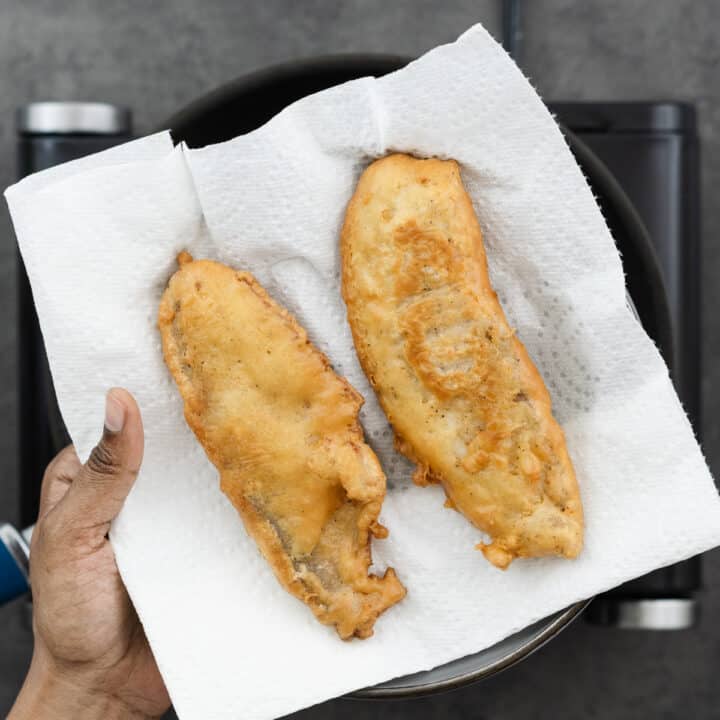
- Cook the fish until the batter is golden and crispy, turning occasionally for even cooking, which should take about 5-7 minutes. Once done, remove the fish from the oil and let it drain on a paper towel before transferring to a wire rack. To keep the fried fish warm while preparing additional batches, place it on the middle rack of an oven preheated to the lowest setting. Now, your crispy batter-fried fish is ready to serve.
Frying Chips
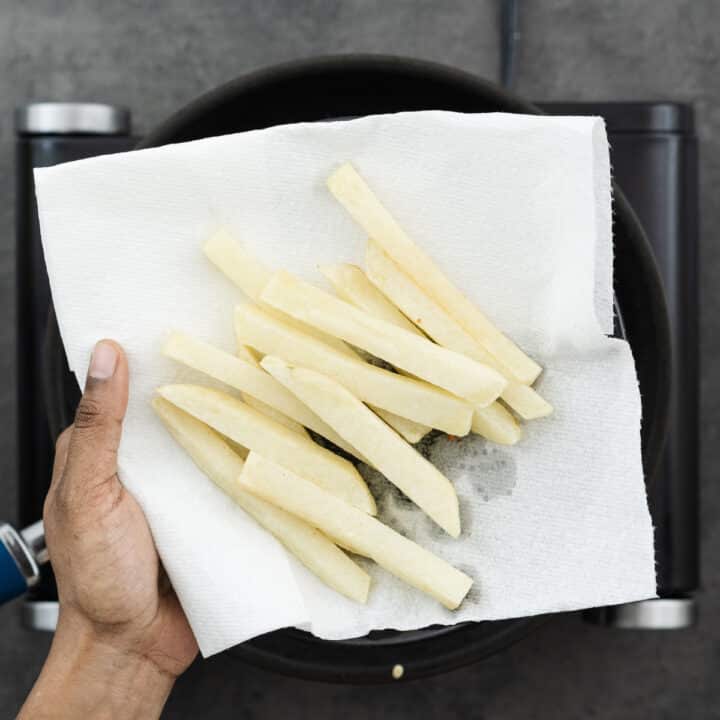
- After frying the fish, check the oil temperature and maintain it at 350 degrees F. The temperature may have dropped slightly. Add the refrigerated potato strips to the oil and fry for 3-5 minutes. This initial fry par-cooks the potatoes, setting them up for a second fry that will make them crispy.
- Once you've fried the potato strips, transfer them to a tray lined with paper towels and refrigerate for at least 30 minutes. This cooling period helps them firm up, enhancing their texture for the final fry.
Double Frying Chips
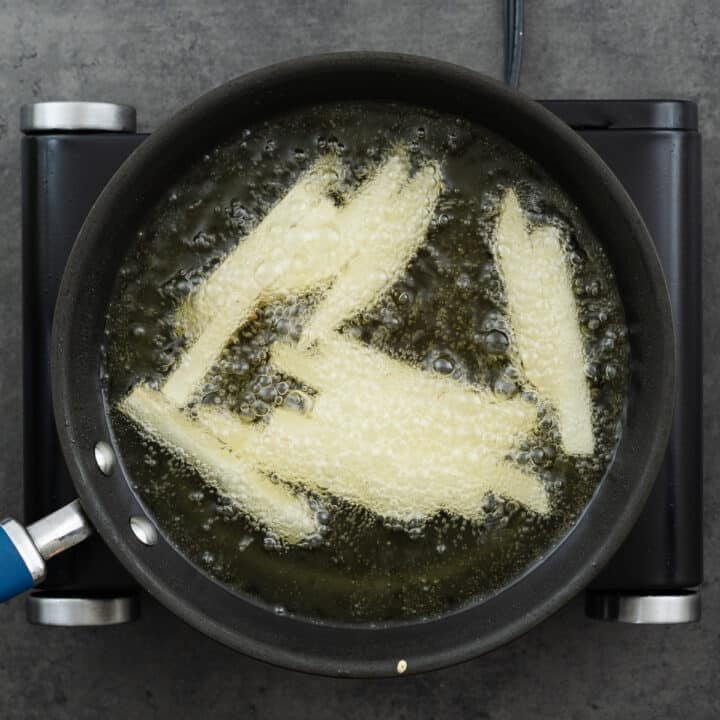
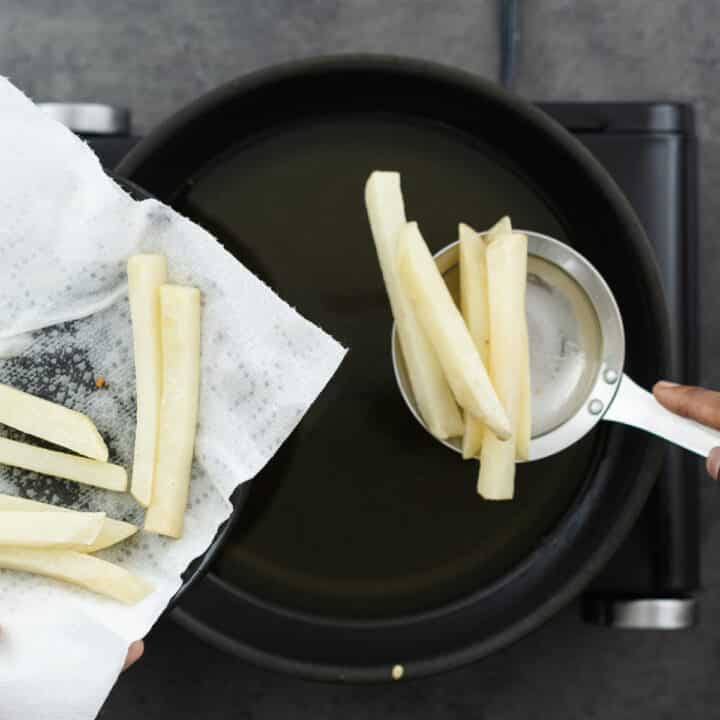
- Heat the oil to 400°F (medium-high heat). Using a slotted spoon, carefully add the refrigerated potato fries to the hot oil.
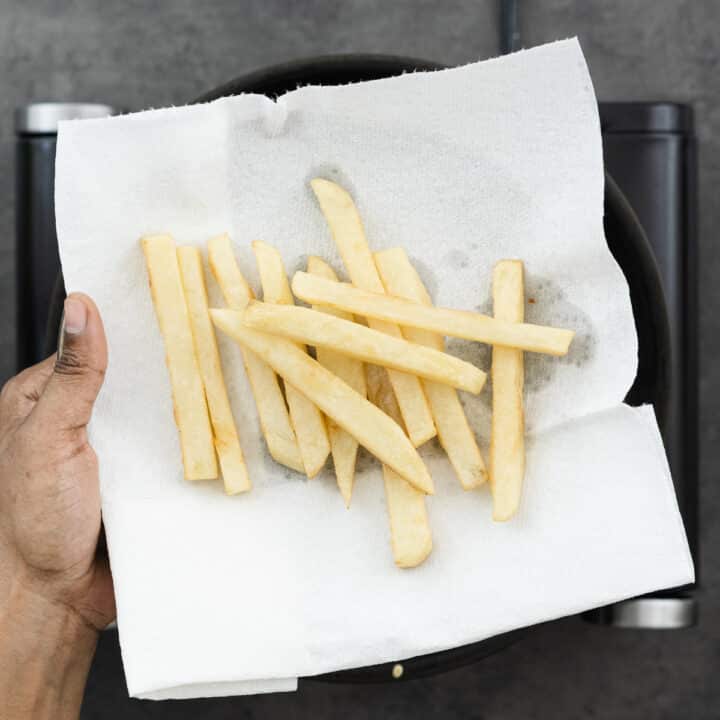
- Stir the potato strips occasionally as they fry, until they turn golden and crispy. Once done, remove them from the oil and transfer to a paper-lined tray. To keep the chips warm while preparing additional batches, place it on the middle rack of an oven preheated to the lowest setting. Now, your crispy chips are ready to be served alongside your fish.
Serving
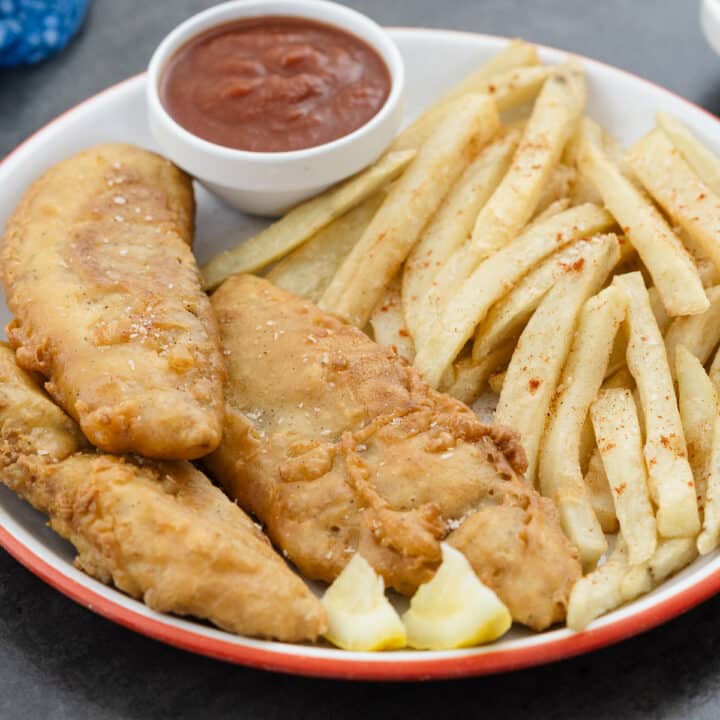
- Serve this classic and crispy Fish and Chips with your favorite dips, such as malt vinegar, tartar or remoulade sauce, ketchup, or mayo, along with lemon wedges for a satisfying meal. For more pairing ideas, check out our Serving Suggestions section below.
Recipe Video
Chef's Notes and Tips
Preparation Tips:
- Check for Fish Bones: Even if you're using boneless fish fillets, small bones might still be there. Gently feel over the fillets with your fingers. If you find any bones, use tweezers to remove them before you add any seasoning.
- Dry the Fillets Well: It's important to make sure your fish fillets are completely dry to get a good batter coating. If they’re damp, pat them down with a kitchen towel to dry them off.
- Slice Potatoes Evenly: Cut your potatoes into uniform slices regardless of their natural shape. This will help them cook evenly, making them crispy on the outside and soft on the inside.
- Perfect Your Batter: Use a thick but flowing batter to coat the fish thoroughly. If the batter is too thick, simply thin it out with a little more milk or beer until you get the right consistency.
Cooking Tips:
- Monitor Frying Temperature: To achieve perfectly crispy results, maintain the correct frying temperature between 350-375°F, checking it with a thermometer. If the oil is too hot, the batter may burn; if too cool, it will make the fish and chips greasy. Adjust the heat as needed.
- Prep the Fish in Batches: To keep the oil temperature stable, fry the fish in small batches rather than all at once. This prevents the oil temperature from dropping too quickly, which can lead to soggy fish.
- Test Oil Readiness Without a Thermometer: Drop a small piece of bread or a wooden chopstick into the oil. If it sizzles and browns within seconds, your oil is ready for frying.
- Avoid Accidents: Use tongs or a wide strainer to safely lower the fish and chips into the oil. To prevent oil splatter and potential burns, consider placing a splatter guard over your frying pan.
- Fry Both in the Same Oil: Feel free to use the same oil for frying both the fish and chips. Keep an eye on the temperature, particularly if you’re double-frying the chips for extra crispiness.
- Keeping the Fish and Chips Warm: To keep the chips and fried fish warm while preparing additional batches, place them on a baking tray with a wire rack in an oven preheated to the lowest setting. This way, they will stay crispy until you complete the other batches.
- Add Beer to Batter for Extra Flavor: If you're not making a kid-friendly version, consider adding beer to your batter instead of milk. The carbonation makes the batter light and crispy, and it adds a subtle flavor that complements the fish beautifully.
- Season Immediately: Season the fish and chips with salt as soon as they come out of the fryer. This helps the seasoning stick better and enhances its flavor.
Nutrition Info
Disclaimer
We're not nutrition experts, and the nutritional information provided is an estimate. Please use it as a guide. For precise details, it's best to consult a professional. To learn more, please view our Detailed Disclaimers.
Serving Suggestions
Fish and Chips are the ultimate comfort food, ideal for satisfying your seafood and fried food cravings, whether it's lunch or dinner. Here are my favorite sides and sauces to pair with this dish.
- Seasonings: Before serving, I love to sprinkle seasoning salt or fry seasoning over hot Fish and Chips for an extra burst of flavor.
- Sauces: Classic dips like tartar sauce, garlic aioli, and remoulade sauce are perfect for seafood. Alternatively, ketchup, mayo, or honey mustard also make excellent pairings with fish and chips.
- Salads: Coleslaw is a classic side for most fried foods, offering a refreshing, creamy texture. Other great choices include green salad, cucumber salad, and Caesar salad, all of which complement fish and chips nicely.
- Malt Vinegar: For a tangy kick, consider serving your fish and chips with traditional malt vinegar. This classic condiment adds a unique tartness that enhances the crispy dish.
- Peas: For a healthy and nutritious side, consider serving mashed or simply steamed green peas, rounding out the meal perfectly.
Storage Suggestions
I recommend serving these Fish and Chips hot as soon as they are fried to enjoy their crispy texture and flavor. However, if you have leftovers, follow these tips to enjoy them again:
- Cool Properly: Allow your fried fish and chips to cool completely at room temperature on a wire rack. This helps the excess oil drip off and prevents steam from making the coating soggy.
- Store Correctly: Once cooled, place the fish and chips separately on a baking sheet lined with paper towels. Cover each loosely with aluminum foil or wax paper to avoid direct air contact. Then, store them in separate airtight containers in the refrigerator. They should stay fresh for up to 2 days.
- Reheat Carefully: When you're ready to enjoy them again, reheat the fish and chips in an oven preheated to 350°F (175°C) for about 10-15 minutes, or until they are heated through and crispy. Avoid using a microwave, as it tends to make them soggy.
Leave a Review